• Skip to main content
  • Skip to primary sidebar
Listen to the Latest Podcast EpisodeAnd We’re Back! Introducing: Diabetes Digital
Food Heaven Made Easy

Food Heaven Made Easy

Black Registered Dietitian Nutritionists | Intuitive Eating Dietitians

  • About
  • Press
    • Diabetes Digital
    • Start Here
    • Podcast
      • Hookup Codes
    • Work With Us
    • Resources
      • Recipes
      • Blog
      • Cookbook
      • Books We Love
    Looking for nutrition counseling with expert registered dietitians?
    Get Started

    Wendy

    Sweet and Savory Smokey Tofu

    October 1, 2012 by Wendy 7 Comments

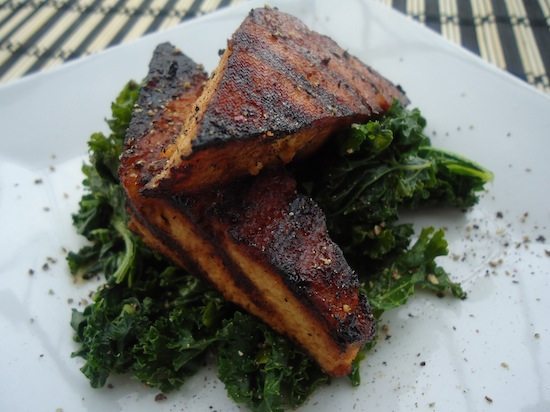
    Not only is this Sweet and Savory Smoky Tofu totally delicious, but it is super easy to prepare as well! Make it to put on a delectable salad, place over a bed of greens, or toss into your favorite stir fry.

    Tofu is made from curdled soy milk that the water has been removed from. It is a great source of protein from that soy and provides a healthy dose of calcium and manganese from a plant-based source.  Many people use it as a meat substitute because it is fairly bland, it marinates well, and has a meat-like texture making it an easy switch without subbing out that necessary protein.

    DSC01421To make, you’ll need to freeze the tofu overnight in the original, unopened package.  This helps to create a chewier texture. Remove the tofu from the freezer and defrost by running hot water on the package.  Press the water out of the tofu by gently squeezing it with your hands. When you drain the tofu, it allows for it to absorb the marinade much more easily.  When pressed, cut the tofu into 8 triangular pieces about ½ inch thick and set aside.  In a bowl, combine the sesame seed oil, maple syrup, orange juice, soy sauce, lime juice, and black pepper and stir together.  Soak the tofu pieces in the marinade for at least an hour or even overnight.  After it is soaked, heat up a pan with vegetable oil.  Cook the tofu pieces for about 5-6 minutes on each side.  Make sure the tofu has a blackened color for the best smoky flavor.  Remove from the pan and enjoy!

    Our favorite way to enjoy tofu is over a nice, hearty bed of greens.  Toss it on a salad with some kale, quinoa, and veggies for a perfectly tasty and balanced meal.  Have you had sweet and savory smoky tofu before? Let us know what you think in the comments below!
    Print
    Sweet & Savory Smokey Tofu
    10 mins
     
    Servings: 4
    Ingredients
    • 1 package of firm tofu
    • 1 tablespoon of sesame seed oil
    • 1 tablespoon of maple syrup
    • 2 tablespoons of orange juice
    • 2 tablespoons of reduced-sodium soy sauce
    • 1/4 cup of lime juice
    • 1 teaspoon of black pepper
    • 1 tablespoon of vegetable oil
    Instructions
    1. Freeze tofu over night in original unopened package.
    2. Remove tofu from freezer and defrost by running hot water on package.
    3. Press the water out of the tofu by squeezing gently with your hands. This will allow for the flavors to be absorbed more easily.
    4. When pressed, cut the tofu into 8 triangular pieces about 1/2 inch thick, and set aside.
    5. In a bowl, combine the sesame seed oil, maple syrup, orange juice, soy sauce, lime juice and black pepper and stir.
    6. Soak the tofu pieces in the marinade for at least an hour. For best results, soak overnight in the fridge.
    7. After soaked, heat up a pan (doesn’t necessarily have to be a grilling pan) with vegetable oil.
    8. Cook the tofu pieces for about 5-6 minutes on each side. Make sure the tofu has a blackened color.
    9. Remove and enjoy!
    Recipe Notes

    Enjoy with vegetables & your favorite grain!
    Filed Under: Main Courses

    Paprika Corn Cobs

    September 17, 2012 by Wendy Leave a Comment

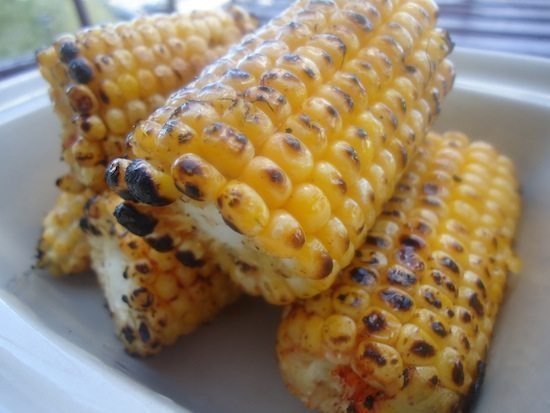
    Paprika cornThe best way to save some money (which I know we would all love to do) is to buy produce while it is in peak season.  Foods that are in season, especially local foods, are cheaper due to surplus and lower production costs.  So make sure you stock up in the summer while it’s hot!
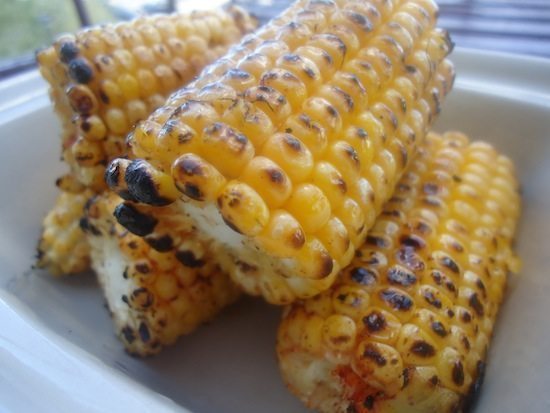
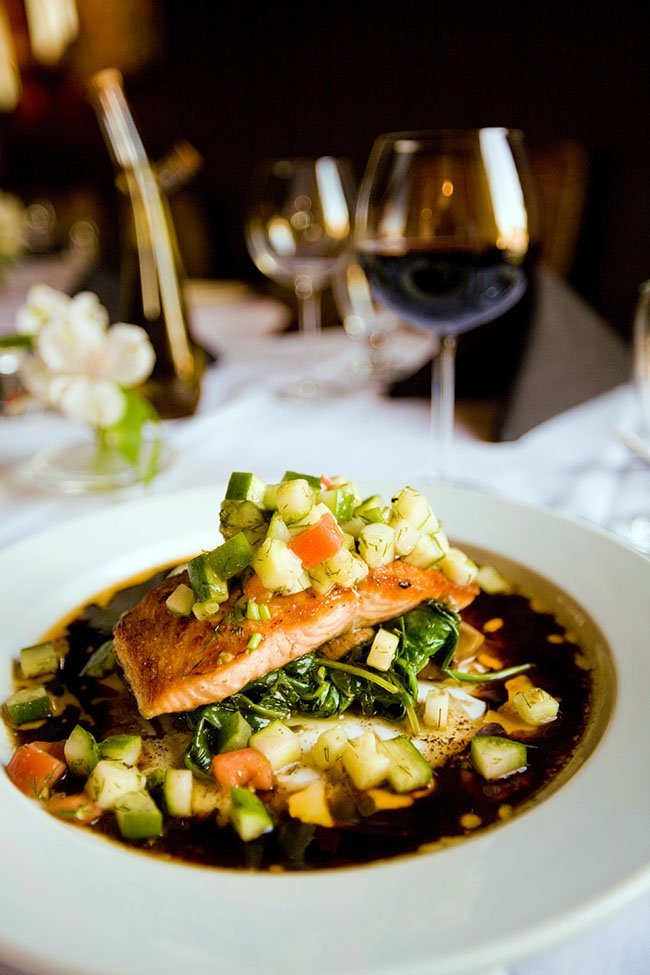
    This recipe is pretty simple and quick to make.  Let’s start with my favorite part: shucking the corn.  Remove the entire husk and wash off the corn in cold water.  Chop the cobs into pieces of 2-3.  Over a bowl, drizzle olive oil over the cobs and then sprinkle with some paprika and cayenne pepper.  If you have a grilling pan, cook each side of the corn for 3-5 minutes in high heat or until the corn browns a bit.  If you do not have a grill, place the cob directly onto your stove burner, exposing them to direct fire.  Cook each side for 3-5 minutes or until you see desired color.  When you finish up, toss on a spritz of lime juice and sprinkle the cobs with salt and pepper.

    We love that this recipe offers a nice kick that is a little bit different than your average corn on the cob recipe.  The paprika and cayenne give the corn that boost to take it to the next level.  How do you like to make your corn on the cob? Let us know what you think in the comments below!

    Print
    Smoked Paprika Corn Cobs
    Total Time
    10 mins
     
    Servings: 4
    Ingredients
    • 2 ears of corn
    • 2 tablespoons of olive oil
    • 1 tablespoon of paprika
    • A dash of cayenne pepper
    • Salt and black pepper
    • 1 Lime
    Instructions
    1. Remove the corn husks, and wash off the corn in cold water.
    2. Chop the cobs into pieces of 2-3.
    3. In a bowl, drizzle olive oil on cobs.
    4. Sprinkle paprika and cayenne pepper on cobs.
    5. If you have a grilling pan, cook on each side for 3-5 minutes under high heat, or until you see desired color.
    6. If you don't have a grill, place the cobs directly onto the stove burners, exposing them to the direct fire. Cook on each side for 3-5 minutes, or until you see desired color.
    7. When finished cooking, squeeze some lime on cobs and sprinkle salt and pepper. Enjoy!

    Filed Under: Appetizers, Salads, Sides

    Nutrition Talks: Serotonin

    August 21, 2012 by Wendy Leave a Comment

    What is serotonin?

    • Serotonin is a neurotransmitter– a type of chemical that relays messages within the brain and body. It’s known for triggering feelings of happiness, and is involved in regulating mood, appetite, memory, sexual behavior, and sleep­.

    How is it made?

    • Tryptophan is an essential amino acid that is needed to synthesize serotonin.
    • We obtain tryptophan from dietary protein, which eventually breaks down into individual amino acids.

    How can I boost my serotonin levels?

    • As I mentioned, tryptophan is the building block for serotonin, and there are foods you can eat that are rich in this essential amino acid.  It sounds pretty simple–eat foods rich in tryptophan and I’m good on the serotonin.
    • Well it gets a little tricky. When you eat a high protein meal, there are other amino acids involved that are competing to enter the brain. When this happens, only a small amount of tryptophan is actually absorbed, and hence only a small of serotonin is made.
    • You can change this by eating a carbohydrate-rich meal, which actually triggers an insulin release, and causes all amino acids EXCEPT tryptophan to be absorbed the body and not the brain.
    • In a nutshell, you’ve just eliminated all of your amino acid competition, and will have just tryptophan flowing into your brain, which will lead to an increase in serotonin levels.

    What other things can you do to help aide absorption?

    • Make sure you’re getting enough vitamin B-6, which influences the rate at which tryptophan is converted into serotonin.
    • Vitamin C, folic acid, and magnesium are also vital in the metabolism of tryptophan.

    What foods are rich in tryptophan?

    • Tuna, spinach, cod, tofu, asparagus, basil, mustard greens, thyme, soybeans, sea vegetables, oregano, collards, chard, kale, black beans, and kidney beans are just a few. Make sure you eat these with a carbohydrate (aim for whole grains, root vegetables) to promote proper absorption.

    Be aware!

    • Although there are foods that contain naturally occurring serotonin, and may be marketed as such, this is of no use to us. Serotonin does not cross the blood-brain barrier, which basically means that it enters our blood, but not the brain.
    • Tryptophan DOES pass the blood-brain barrier, meaning it enters our brains, which is where all the serotonin action happens.


    Filed Under: Articles

    The BEST Tofu Scramble Recipe

    August 12, 2012 by Wendy 8 Comments

    When we say that this is the Best Tofu Scramble Recipe, we mean it! You can use it in so many different ways.  

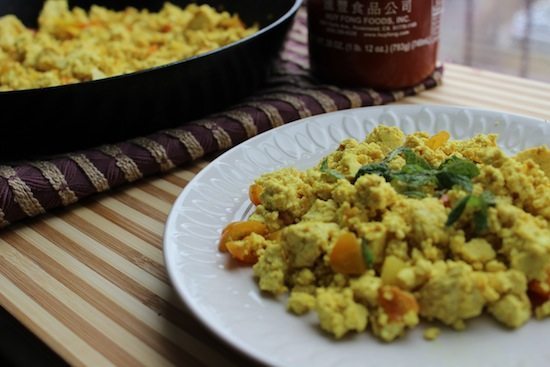
    best tofu scrambleTofu tends to have a meat like texture that many people like and is great to mimic the texture of scrambled eggs. Tofu is also a phenomenal source of protein that is made from curdled soy milk that the water has been removed from. Soy provides a healthy dose of calcium and manganese and many studies have found that the phytoestrogens in soy may help to reduce some cancers such as breast cancer or endometrial cancers and reduce the risk of heart disease.  
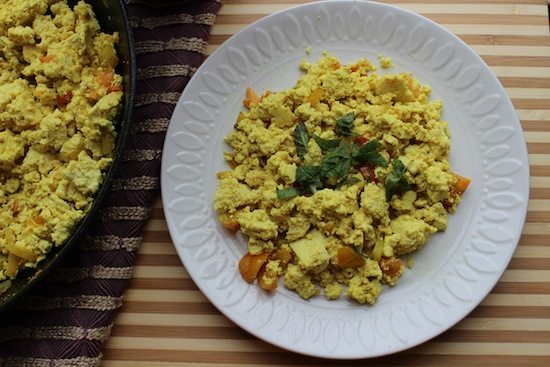
    best tofu scrambleLet’s get started with this recipe! Heat oil and lightly sauté onion, mushrooms, and spices. Add tofu, pepper, cheese or nutritional yeast, and salt, mix together, and cook over low heat until tofu is thoroughly heated, 5 to 10 minutes. Enjoy with sliced avocado. Serve with toasted whole-grain bread or English muffins.
    The best part of this recipe is that you can add almost anything you would like to it.  Looking for some more protein? Throw in some beans.  Trying to squeeze more veggies in your day? Toss in some peppers and greens.  Want to use up those extra herbs? Scatter in some cilantro or parsley.  How would you prep this scramble to make it uniquely your own? Let us know what you think in the comments below!

    Print
    The BEST Tofu Scramble
    Servings: 4
    Ingredients
    • 1 tablespoon oil
    • 1 large onion, chopped
    • 1 cup sliced mushrooms
    • ¼ teaspoon each of curry powder and ground turmeric
    • 12 ounces of firm tofu, drained (squeeze in dry towel) and crumbled
    • Dash black pepper
    • ½ cup grated cheddar cheese or 2 tablespoons of nutritional yeast
    • ½ teaspoon salt
    • Sliced avocado, for topping
    Instructions
    1. Heat oil and lightly sauté onion, mushrooms, and spices.

    2. Add tofu, pepper, cheese or nutritional yeast, and salt, mix together, and cook over low heat until tofu is thoroughly heated, 5 to 10 minutes.

    3. Enjoy with sliced avocado. Serve with toasted whole-grain bread or English muffins.

    Filed Under: Breakfast

    Which Oils Are Best For Cooking?

    August 7, 2012 by Wendy Leave a Comment

    We’ve come across a lot of people who have asked us which type of oil is best for x, y, and z so we decided to come up with a simple guide to assist you in selecting the best oils for your kitchen. When it comes to preparing food with heat, the most important factor is the smoke point of the oil you are using.

    What’s a smoke point? It’s the temperature at which the oil breaks down into glycerol and fatty acids. When this temperature is reached, you will literally see smoke being produced from the oil.

    Why is the smoke point so crucial? Once oil has reached its smoke point, further heating of the oil can produce harmful free radicals (which have been linked to cancer). It’s important to carefully select the proper oils for different types of cooking. Those with lower smoke points should be used for low/no-heat food preparation, while those with higher smoke points should be used for cooking that requires high heat. Check out this useful chart to guide you through smoke points for different oils.

    How do Omega 3s and Omega 6s fall into play? Omega-6 fatty acids are pro-inflammatory acids found in safflower, sunflower, corn, and soybean oil. Omega-3’s are anti-inflammatory acids found in canola, flaxseed, walnut, and hemp oils. Both of these are polyunsaturated fatty acids and offer health benefits, but various studies have shown that our ratio of Omega 6 to Omega 3 intake is tremendously unbalanced. We are consuming way too many Omega 6 oils and not nearly enough Omega 3s. This is because Omega 6’s are heavily used in the preparation of processed foods, which is something we love here in the United States. The unbalance between these two essential fatty acids has been linked to the development of many diseases including cardiovascular disease, colorectal and breast cancer, and inflammatory disease.

    What’s the take home message? If using oils to cook food, aim to use Omega 3s (canola, flaxseed, walnut, hemp), and minimize the use of Omega 6s (corn, soy, sunflower). You can also use monounsaturated oils, which include almond, avocado, and hazelnut oils. Many of them have high smoke points, which make them optimal for high heat cooking. Olive oil is another monounsaturated oil, however, most extra virgin olive oils have a very low smoke point. Instead, use extra virgin olive oil for non-cooked dishes, such as salad dressings and seasonings.


    Filed Under: Articles

    Why Amaranth Greens Rock

    July 21, 2012 by Wendy Leave a Comment

    So today I went to the farmers market and ran across some leafy looking greens. I asked farmer dude what they were, and he told me they were amaranth greens, and when you sauté them, they come out really tasty. So I decided to grab a bunch and try them out. SO excited about this! (can you tell?) I was also interested in knowing a little more about the plant so here’s what I found out…

    • Amaranth, also known as kiwicha to the Incas, represents a collection of a variety of herbs, that offer greens and grains
    • The seed of the plant is known as the grain, and was widely grown among the indigenous peoples of the Americas
    • Amaranth grains are awesome because they’re a great source of protein- specifically in essential amino acid lysine, which is a bit hard to get from foods. They’re also gluten-free (for all my celiacs!) and high in fiber!
    • Amaranth greens are rich in vitamin A, vitamin C, calcium, and iron.

    So with all of that being said, we give amaranth a huge thumbs UP! Now I have to figure out what to do with this huge bunch so expect some recipes!

    *Amaranth is also called callaloo in many Caribbean countries.

    Filed Under: Articles

    • « Go to Previous Page
    • Page 1
    • Interim pages omitted …
    • Page 93
    • Page 94
    • Page 95
    • Page 96
    • Go to Next Page »

    Primary Sidebar

    Search

    Let’s Connect

    Meet Wendy & Jess

    Registered Dietitians & BFF's. We're probably busy eating right now.

    Subscribe to our Podcast

    food heaven podcast

    Podcast Hookup Codes

    food heaven podcast hookup codes

    Meet Wendy & Jess

    Registered Dietitians & BFF's. We're probably busy eating right now.

    • Diabetes Digital
    • Our Story
    • Recipes
    • Resources
    • Articles
    • Contact
    • Policies
    © Food Heaven Made Easy
    In order to provide you with the best service, our website uses cookies. By continuing to browse the site you are agreeing to our Privacy Policy I consent
    Privacy Policy

    Privacy Overview

    This website uses cookies to improve your experience while you navigate through the website. Out of these cookies, the cookies that are categorized as necessary are stored on your browser as they are essential for the working of basic functionalities of the website. We also use third-party cookies that help us analyze and understand how you use this website. These cookies will be stored in your browser only with your consent. You also have the option to opt-out of these cookies. But opting out of some of these cookies may have an effect on your browsing experience.
    Necessary
    Always Enabled
    Necessary cookies are absolutely essential for the website to function properly. This category only includes cookies that ensures basic functionalities and security features of the website. These cookies do not store any personal information.
    Non-necessary
    Any cookies that may not be particularly necessary for the website to function and is used specifically to collect user personal data via analytics, ads, other embedded contents are termed as non-necessary cookies. It is mandatory to procure user consent prior to running these cookies on your website.
    SAVE & ACCEPT