
• Skip to main content
  • Skip to primary sidebar
Listen to the Latest Podcast EpisodeAnd We’re Back! Introducing: Diabetes Digital
Food Heaven Made Easy

Food Heaven Made Easy

Black Registered Dietitian Nutritionists | Intuitive Eating Dietitians

  • About
  • Press
    • Diabetes Digital
    • Start Here
    • Podcast
      • Hookup Codes
    • Work With Us
    • Resources
      • Recipes
      • Blog
      • Cookbook
      • Books We Love
    Looking for nutrition counseling with expert registered dietitians?
    Get Started

    Wendy

    Q&A Minisode: Remedies For Acid Reflux

    April 9, 2017 by Wendy Leave a Comment

    Today we’re answering this listener question…what are some good flavorful seasonings for reflux? Listen to this week’s episode to learn about lifestyle strategies you can incorporate to manage reflux symptoms. 

    What is reflux?

    • Let’s start off by quickly going over what reflux is.
    • It basically happens when the lower esophageal sphincter opens spontaneously or doesn’t close properly, so the food from your stomach comes up into the esophagus.
    • Doesn’t sound very fun, and for those of you who’ve experienced it, it really sucks.
    • You feel a burn in your throat, and aren’t able to fully enjoy the meal you’ve just eaten

    What are some lifestyle strategies to minimize symptoms? 

    • As dietitians, we usually recommend avoiding trigger foods that are known to cause the reflux
    • These foods can vary for certain people, but common ones include coffee, chocolate, any caffeine beverages (including caffeinated teas), peppermint, spicy foods, and greasy/fatty foods.
    • We also recommend eating smaller, more frequent meals to ease the symptoms
    • Other helpful tips include chewing slowly- nowadays, we’re downing meals within 10 minutes. Take your time and be mindful of the food you’re taking in. Spend 30 minutes per meal when possible
    • Also avoid eating too close to bedtime. Laying down right after eating a meal can trigger the reflux
    • Stress also makes symptoms worse so chill out and practice some relaxation techniques like yoga, deep breathing, and restful sleep.
    • Lastly, if you smoke, consider quitting since nicotine can worsen the reflux. Alcohol is another thing to consider limiting or quitting altogether, as it irritates the esophageal lining

    What herbs and seasonings should you use and avoid? 

    • Now for the listener’s question- what are some flavorful seasonings that help with reflux.
    • I dug into the research for this one and came across some herbs that are less likely to cause reflux, and may actually help with symptoms
    • Chamomile: Has been shown to help with reflux, inflammation and indigestion. People often make tea with chamomile, but you can add it to salads, smoothies, and broths
    • Slippery Elm: Is an herb that comes in the form of supplements, teas, and tinctures and has been shown to provide some protection against the irritation that happens in the esophagus during reflux.
    • Probiotics: Usually a good option to consider if you have gastrointestinal drama going on. Probiotics restore a healthy balance of good bacteria in our digestive tracts, and can help prevent the overgrowth of the not-so-good bacteria- which may be helpful for reflux
    • The listener specifically asked about seasonings for food, and as I mentioned before, with reflux, it should be treated on a case by case basis
    • If eating foods with for ex, cayenne pepper or curry, trigger the reflux, completely avoid it
    • It may take some trial and error, but it’s mostly paying close attention to how you feel as you eat different types of foods/spices
    • One idea is to start with minimally seasoned meals, and slowly add in spices one by one, on different days, over the course of 1-2 weeks, to assess how you feel

    I hope this was helpful, and thank you so much for sending us your question. We encourage all of you to go ahead and send us your questions as well! Simply go to our webiste, click on the podcast tab, and record your question at the top of the page

    If you enjoy our podcast, make sure to rate and review us on iTunes & Stitcher. This way we’re able to reach more people. Thanks so much for tuning in and we’ll catch you next time!

    Resources:

    http://www.eatright.org/resource/health/wellness/digestive-health/what-you-need-to-know-about-gerd

    http://www.todaysdietitian.com/newarchives/090313p18.shtml

    Filed Under: Podcast

    10 Easy Ways To Drink More Water

    April 5, 2017 by Wendy 4 Comments

    SERIOUS QUESTION:

    What color is your pee?!? The reason we ask is because one of the best ways to determine your hydration status is to look at your urine color.⁠

    ⁠Here’s a color guide:⁠
    ?100 percent transparent (clear): Most likely over hydrated⁠
    ?Lemonade to light beer: Solidly hydrated⁠
    ?Concentrated amber to copper: Probably time to drink some water⁠
    ?Light roast coffee to burnt orange: Likely severely dehydrated.⁠
    ?Wine red to pink: Did you just eat beets? OK if so⁠

    WHY DRINK WATER?

    Water has so many important roles in the body. It provides a medium for our cells to carry out the necessary functions such as nutrient metabolism or other enzymatic reactions. For one, it helps to maintain a healthy body temperature. It also lubricates and cushions joints, protects your tissues and spine, and helps to rid toxins through urine, sweat, and other bodily functions. It filters through the kidneys, respiratory system, and digestive system to eliminate waste and ensure proper digestion. Drinking enough water can even ease constipation and prevent kidney stones. It can help you to feel satiated after a meal, keep you alert throughout the day, and keep you hydrated during physical activity.

    Now, we know you probably already knew a lot of this. So what’s holding you back? Many clients we work with struggle to meet the recommended amount of water for their needs for a wide variety of reasons. We’re here to offer some of our most effective hydration tips that have worked in our personal lives and been helpful for our clients. 

    HOW MUCH WATER SHOULD YOU DRINK? 

    Before you can make sure you’re well hydrated, you should probably know how much water you need. A general recommendation is typically 8, 8 oz. glasses of water per day, which is about 64 oz. in total. Though 64 oz. a day is a good recommendation for how much water to drink, it is not a specific guideline for everyone. Some people may need more or less water for different reasons.

    One of the most obvious needs for additional water is for those who exercise. Any time you work up a sweat, you should make sure you drink enough water to account for fluid losses. Hot or humid environments also increase fluid loss, so make sure to stay hydrated in those conditions. If you are sick and experience vomiting, diarrhea, or fever, make sure to drink extra water to recover from the fluid loss that these symptoms/conditions bring. Fluid needs also increase during pregnancy or for women who are breastfeeding. If you would like to know what your exact needs are, try this fluid needs calculator or discuss your fluid requirements with your physician or Registered Dietitian. 

    WHAT ARE SOME TIPS FOR DRINKING MORE WATER? 

    We thought you’d never ask. Here are our ten tips to getting more water in throughout the day:

    1. Invest in a water reusable water bottle that you love.
    2. Carry a water bottle with you everywhere! To the store, to school, to work. Buy one that’s easy to carry around. 
    3. Naturally flavor your water to give it some spunk like our Herb Infused H20 recipe or our Naturally Flavored Water, 3 Ways. You can also try unsweetened herbal tea! 
    4. Keep a fresh pitcher of water ready in the refrigerator so you have some nice, cold water ready to go.
    5. Switch out that soda with sparkling water.
    6. Set an alarm on your phone every so often to remind you to sip.
    7. Start each morning with one cup of water. Then have one cup before and after each meal (7 cups down, 1 to go!)
    8. Try downloading an app to track your daily water intake like Daily Water Free.
    9. Place cups of water around the house as a reminder. Have a cup of water in the living room, kitchen, bedroom (I even have one in my bathroom!) 
    10. Eat foods that have a high water content to contribute to your overall hydration like cucumber, watermelon, zucchini, or grapefruit.

    A good test to know if you are hydrated enough may be the color of your urine. If your urine is light yellow or colorless, you are likely getting plenty of water. However, if you find that your urine is a dark yellow, you may need to fill that cup back up.

    Any new ideas for hydration jumping out at you? Try one out today and tell us about it. Also share any other creative ideas that work for you in the comments below!

    Filed Under: Articles

    Warm Maple Amaranth Porridge

    March 28, 2017 by Wendy 9 Comments

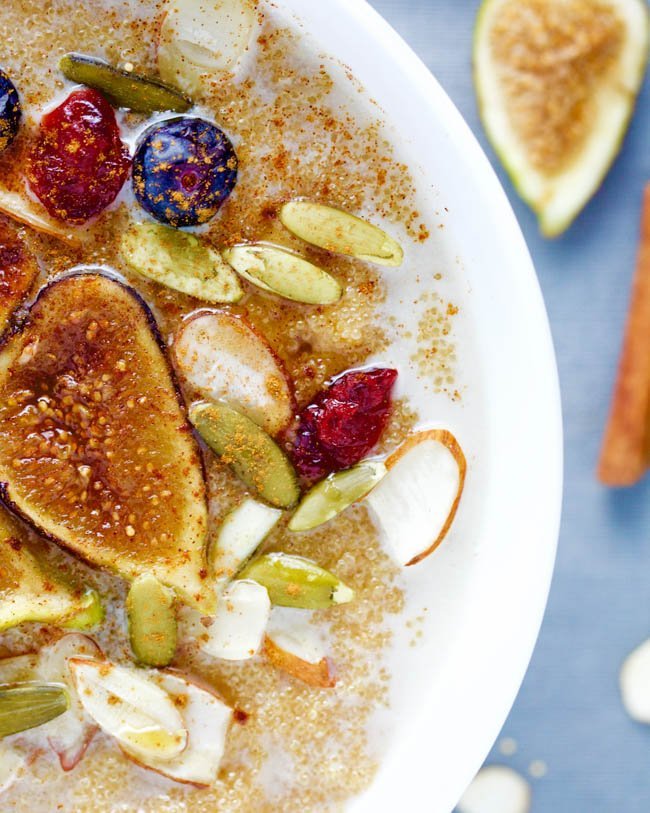
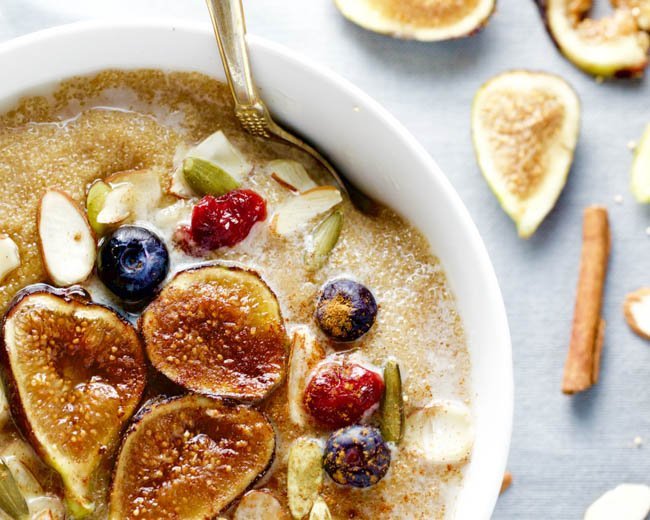
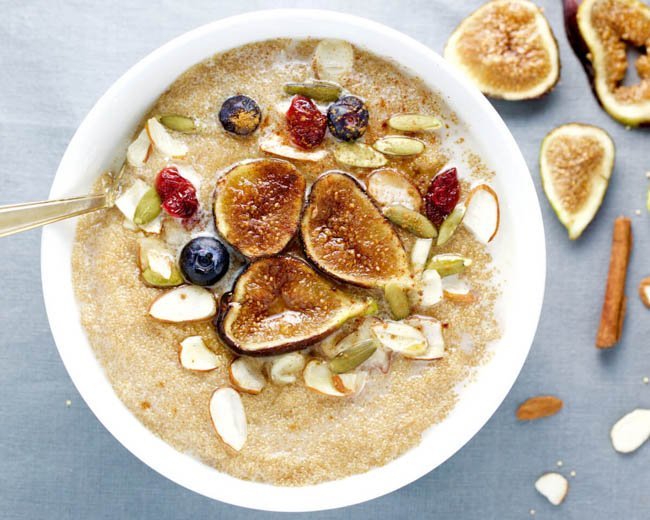
    Who needs to add a little cozy to their mornings? We definitely do! This Warm Maple Amaranth Porridge is going to bring so much comfort and joy to your mornings. 

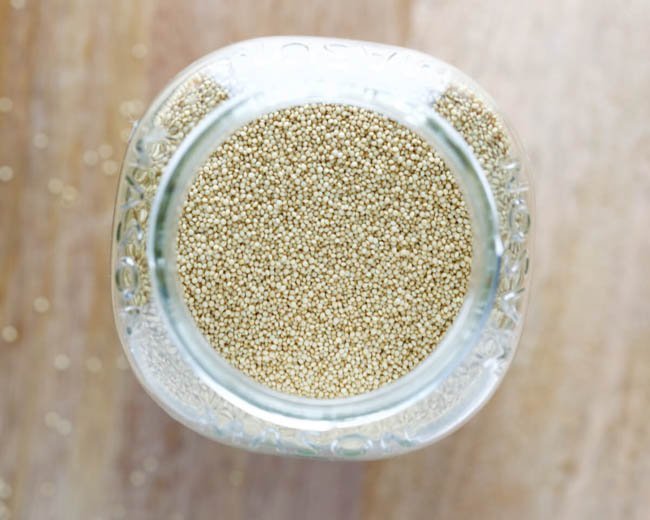
    Have any of you used amaranth before? Amaranth is actually a seed from the amaranth plant. It offers a great, gluten-free alternative for those of you with gluten allergies or sensitivities. Amaranth is packed with a range of vitamins and minerals. It contains vitamin B6, folate, and calcium. It’s also an excellent source of iron, magnesium, phosphorous, manganese, and selenium. HELLO POWERHOUSE. Amaranth alone is reason enough to get up in the morning! 

    We’ll be topping our porridge with one of my favorite foods…figs! Figs are fruits that are deliciously sweet and tart. Often people are puzzled when it comes figs. What do they look like? How do I eat it? How do I know when it is ripe and ready? You can eat figs as a raw, fresh fruit or dried. Fresh ripe figs will be slightly soft to the touch. When you’re ready to eat, just wash the fruit, cut in half, and eat up. For a full step-by-step guide to choosing and eating figs check out this article here. 

    Now, let’s get cooking! In a medium pot, bring the water to a boil and add the amaranth. Cook over low heat, with the lid on, for 20 minutes or until most of the water has been absorbed. While the amaranth is cooking, make sure to stir occasionally. Once done, remove from the stove, and add the almond milk, maple syrup, vanilla, cinnamon, and coconut oil to the pot. Stir in well and then serve into bowls. Top with any of the suggested toppings below or your favorite fruits, nuts, and/or seeds! If you’re eating alone, store the leftovers in the fridge for up to a week. When it’s time to reheat, add some additional almond milk and mix it in so the porridge isn’t too thick. Enjoy!

    Alright, so what do we think of our Warm Maple Amaranth Porridge? Have you ever had amaranth for breakfast? Let us know what you think in the comments below!

    5 from 1 vote
    Print
    Warm Maple Spiced Amaranth Porridge
    Servings: 4
    Ingredients
    • 3 cups water
    • 1 cup amaranth
    • 3/4 cups unsweetened almond milk
    • 1 1/2 tablespoons maple syrup
    • 1/4 teaspoon vanilla extract
    • 1/2 teaspoon ground cinnamon
    • 2 teaspoons coconut oil
    Suggested Toppings
    • Figs, blueberries, sliced almonds, pumpkin seeds, dried cranberries
    Instructions
    1. In a medium pot, bring the water to a boil and add the amaranth
    2. Cook over low heat, with the lid on, for 20 minutes or until most of the water has been absorbed
    3. While the amaranth is cooking, make sure to stir occasionally
    4. Once done, remove from the stove, and add the almond milk, maple syrup, vanilla, cinnamon, and coconut oil to the pot
    5. Stir in well, and then serve into bowls
    6. Top with any of the suggested toppings or your favorite fruits, nuts, and/or seeds!
    7. If you're eating alone, store the leftovers in the fridge for up to a week. When it's time to reheat, add some additional almond milk and mix it in so the porridge isn't so thick. Enjoy!

    Filed Under: Breakfast

    Nutrition & Lifestyle Interventions for PCOS w/ Angela Grassi

    March 27, 2017 by Wendy Leave a Comment

    For today’s episode, we’ll be talking about PCOS aka polycystic ovarian syndrome with our very special guest, Angela Grassi, MS, RD, LDN. As part of this episode, we’ll get into:

    • What PCOS is
    • Causes & risk factors
    • Signs women should be look out for 
    • PCOS diagnosis criteria 
    • Nutrition & lifestyle interventions
    • Complementary treatments, and more!

    Angela is an internationally known nutrition expert on PCOS, and was named one of the Top 10 Incredible RD’s Making A Difference by Today’s Dietitian. Having PCOS herself, Angela has experienced all the challenges that come with having PCOS, and has dedicated her career to helping women with PCOS improve their health through evidenced based nutrition. She’s the founder of the PCOS Nutrition Center, and has written several books, including the bestselling PCOS Workbook: Your Guide to Complete Physical and Emotional Health. 

    You can find her books here! 

    Filed Under: Podcast

    Should You Do A Detox Diet?

    March 21, 2017 by Wendy 12 Comments

    Should you do the detox? We have been asked this question time and time again. What do you think about juice cleanses? The 48-hour cleanse? Tea-tox? The Master cleanse? Charcoal cleanse? You name it…we’ve probably been asked about it.

    Cleanses and detoxes seem to be the hottest thing in the weight loss industry today. But the fact of the matter is: There is no real evidence that detoxes live up to the claims, and when all is said and done, they can be a big hit to your bank account.

    The good news is: your body is a wonderland. The body is naturally designed to rid toxins and other harmful substances through these major detoxifying systems.

    Here is a rundown of the body’s natural detox pathways:

    Kidneys

    Take a minute to thank your nephrons. They are two bean looking organs (picture: kidney beans) located in your abdomen. The renal system targets the blood to filter through the toxins and fluids. Basically, they change those toxins and fluids into urine. So staying hydrated is the biggest cleanse you can do for your renal system. Try drinking 8, 8-oz. glasses of water per day to make sure you keep those kidneys in shape!

    Lungs

    You may not think of the lungs as a way to cleanse the body but they are one of the key detoxers! Toxins might also come in the form of gases, but guess what? Those sponge-like organs take in oxygen and rid the body of carbon dioxide, nitrogen, and other gases. 

    GI Tract

    Your gastrointestinal tract is one of the most important systems for cleansing the body. The GI tract differentiates from vital nutrients to be absorbed and what to expel. This finally results in that number two you probably don’t want to talk about. In fact, there’s a ton of new research emphasizing just how important our GI tract is for the rest of our body functions. In order to keep a healthy GI, make sure to have plenty of fiber, pre and probiotics such as fruits, vegetables, yogurt, kefir, fermented vegetables, soy products, and/or beans!

    Liver

    The liver is an powerful organ that secretes enzymes to process toxins for excretion. It also works to break down fat, maintain proper blood glucose levels, and filter harmful substances out of the blood. Who needs a juice cleanse when you have a liver working for you?

    So What’s The Bottom Line?

    You don’t need that fancy, shmancy, expensive cleanse or detox. Though some diseases may require avoidance or limitation of certain foods (which should be done with the help of a physician or dietitian), a healthy and hydrated body can rid itself from harmful toxins.

    So what does work for enhancing our body’s natural detox systems? Eating your veggies, drinking water, and getting that blood pumping everyday. Plant-based eating allows each of the organs to function properly by providing your beautiful bod with the proper vitamins, minerals, fiber, and other food components that other foods don’t provide in quite the same way that plants do.

    • Try to consume two fruits per day. Berries, bananas, pears, apples, oranges, kiwi, blueberries, and the list goes on!
    • Aim for at least 3 cups of high fiber vegetables per day such as dark leafy greens, cauliflower, beets, and/or Brussels sprouts.
    • Make half of that plate non-starchy vegetables for meals.
    • Drink 8, 8-oz. glasses of water per day.
    • Limit sugar-sweetened beverages.
    • Move! Go for a walk or run, do some yoga, lift those weights. Moving everyday keeps your blood flowing like a well-oiled machine.

    Following these healthy eating and living tips will allow your organs to work at maximum efficiency, which (I think it’s safe to say) makes this the best cleanse on the market. Need a little bit of guidance: our 28-Day Plant Powered Health Reboot is perfect way to reboot and get yourself back on track! Have you tried any special detoxes before? Drop a line in the comments section below and let us know what you did and how your experience was. xoxo

    Filed Under: Articles

    Cauliflower Steaks w/ Chimichurri Sauce

    March 17, 2017 by Wendy 4 Comments

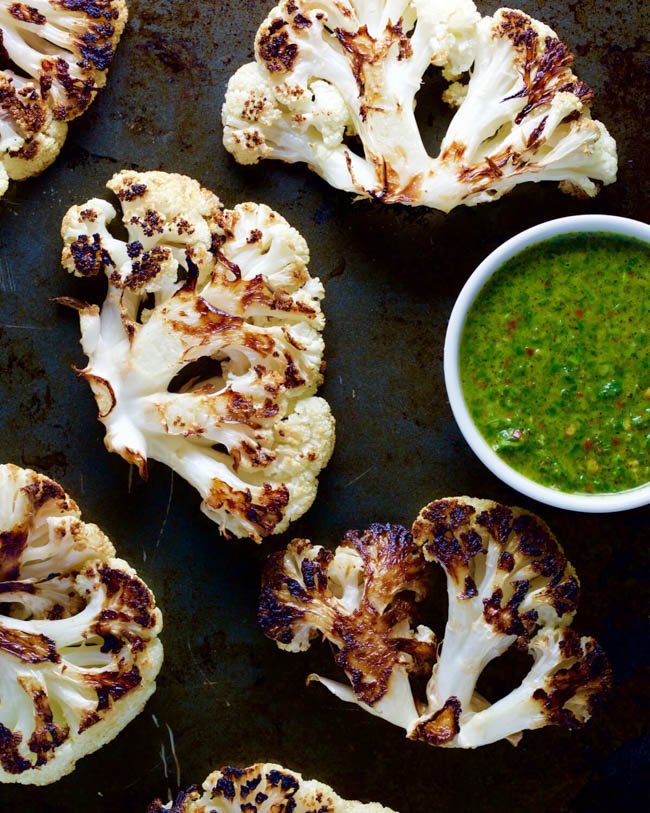
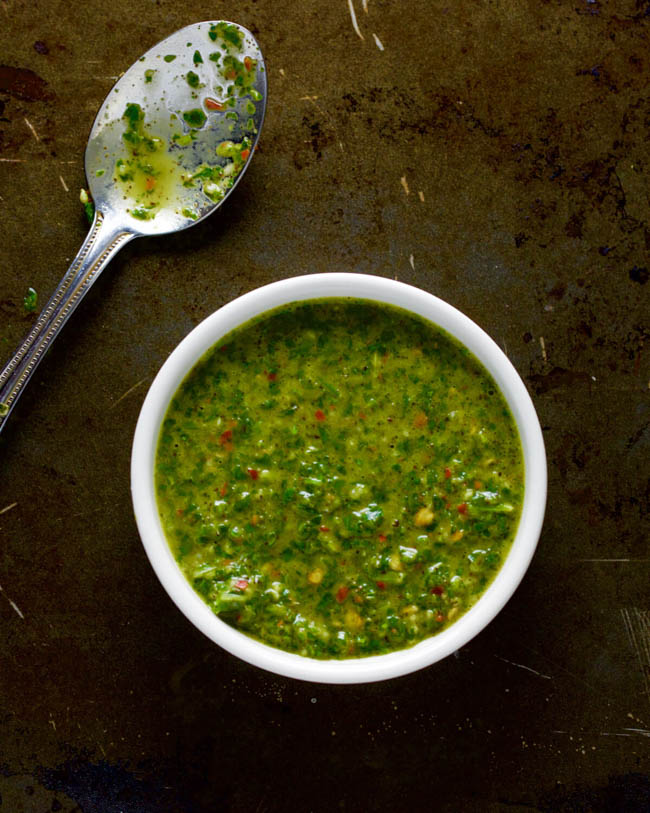
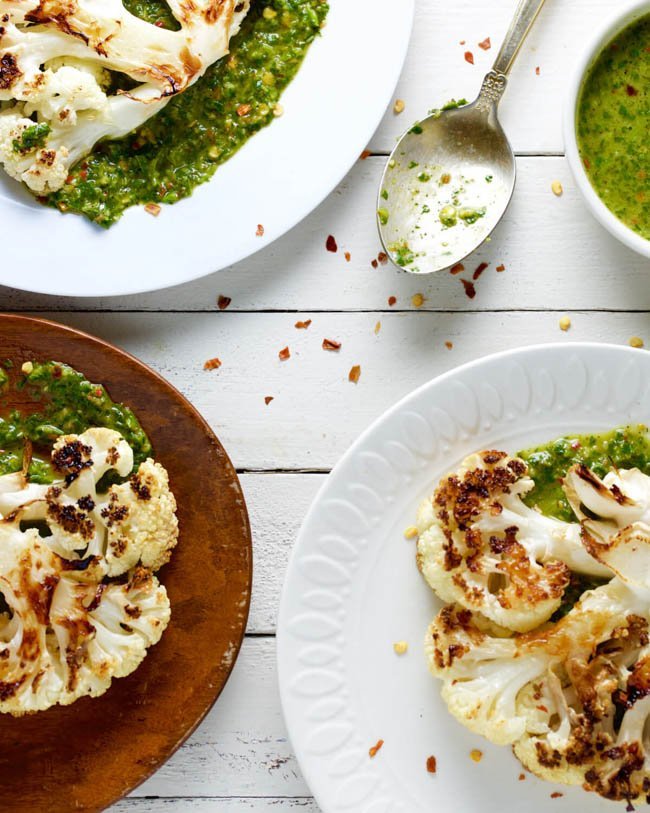
    Cauliflower is such a fun vegetable because it can be morphed into so many different recipes in the kitchen. This week, we’re bringing you these savory Cauliflower Steaks paired with a Chimichurri Sauce recipe! You’ll obsess over this one.

    As we mentioned before, cauliflower is super versatile, which makes it an excellent kitchen staple. It can be used as rice or couscous, pizza crust, and many other creative options. It is best in season during the summer months, but you can always find it in your supermarket.  We especially like it because it is a fairly bland vegetable that pairs wonderfully with other delicious flavors and sauces (i.e. our chimichurri sauce). Not to mention, cauliflower provides a hefty dose of vitamin C! 
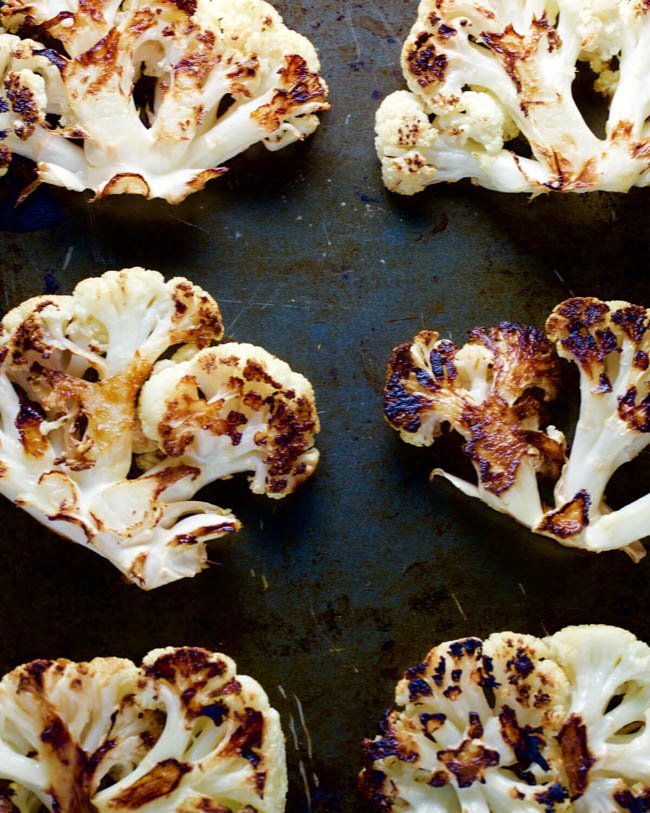
    Let’s get started! Kick that oven up to 400F. Start by trimming the leaves from the cauliflower and slice the cauliflower through the center. Then cut each half into 1″ thick “steak” slices. You should have 3-4 steak slices for each half, for a total of 6-8 steaks. Line a baking sheet with the steak slices and set aside. Note that there may be some cauliflower florets that fall apart as you cut the steaks. Don’t throw those away! Add them to the baking sheet too, and enjoy with the sauce. 

    Okay, let’s keep it moving. In a bowl, combine the rice vinegar, olive oil, and maple syrup. Mix with a spoon and drizzle onto the cauliflower steaks. Place the baking sheet into the oven and bake for 20 minutes. Flip the steaks, and bake for another 25 minutes. While the cauliflower is baking, let’s move on to our chimichurri sauce. Add all of the ingredients for the sauce (except the salt) into a blender or food processor. Blend until consistent, and add salt to taste. Once the cauliflower is ready, smother the chimichurri sauce on each steak. Store the rest of the sauce and any leftover cauliflower for up to 1 week!

    Have you tried any other creative cauliflower recipes recently? Thoughts on our Cauliflower Steaks with Chimichurri Sauce? Be sure to hit us up in the comments below!
    Print
    Cauliflower Steak With Chimichurri Sauce, YIELDS 6-8 STEAKS
    Ingredients
    • 1 medium cauliflower
    • 1/4 cup rice vinegar
    • 2 tablespoons olive oil
    • 1 tablespoon maple syrup
    Chimichurri sauce
    • 1/2 cup parsley leaves
    • 1/4 cup cilantro leaves
    • 4 cloves garlic
    • 1 tablespoon red pepper flakes
    • 1/2 tablespoon ground oregano
    • 3 tablespoons red wine vinegar
    • 1/2 cup olive oil
    • Salt to taste
    Instructions
    1. Preheat the oven to 400F
    2. Trim the leaves from the cauliflower
    3. Slice the cauliflower through the center, and then cut each half into 1" thick "steak" slices
    4. You should have 3-4 steak slices for each half, for a total of 6-8 steaks
    5. Line a baking sheet with the steak slices and set aside
    6. In a bowl, combine the rice vinegar, olive oil, and maple syrup. Mix with a spoon and drizzle onto the cauliflower steaks
    7. Place the baking sheet into the oven and bake for 20 minutes. Flip the steaks, and bake for another 25 minutes
    8. While the cauliflower is baking, let's move on to our chimichurri sauce
    9. Add all the ingredients for the sauce (except the salt) into a blender or food processor
    10. Blend until consistent, and add salt to taste
    11. Once the cauliflower is ready, smother the chimichurri sauce on each steak

    12. Store the rest of the sauce and any leftover cauliflower for up to 1 week!
    Recipe Notes

    There may be some cauliflower florets that fall to the side when slicing. Don't throw those away! Add those to the baking dish too

    Filed Under: Appetizers, Salads, Sides

    • « Go to Previous Page
    • Page 1
    • Interim pages omitted …
    • Page 77
    • Page 78
    • Page 79
    • Page 80
    • Page 81
    • Interim pages omitted …
    • Page 96
    • Go to Next Page »

    Primary Sidebar

    Search

    Let’s Connect

    Meet Wendy & Jess

    Registered Dietitians & BFF's. We're probably busy eating right now.

    Subscribe to our Podcast

    food heaven podcast

    Podcast Hookup Codes

    food heaven podcast hookup codes

    Meet Wendy & Jess

    Registered Dietitians & BFF's. We're probably busy eating right now.

    • Diabetes Digital
    • Our Story
    • Recipes
    • Resources
    • Articles
    • Contact
    • Policies
    © Food Heaven Made Easy
    In order to provide you with the best service, our website uses cookies. By continuing to browse the site you are agreeing to our Privacy Policy I consent
    Privacy Policy

    Privacy Overview

    This website uses cookies to improve your experience while you navigate through the website. Out of these cookies, the cookies that are categorized as necessary are stored on your browser as they are essential for the working of basic functionalities of the website. We also use third-party cookies that help us analyze and understand how you use this website. These cookies will be stored in your browser only with your consent. You also have the option to opt-out of these cookies. But opting out of some of these cookies may have an effect on your browsing experience.
    Necessary
    Always Enabled
    Necessary cookies are absolutely essential for the website to function properly. This category only includes cookies that ensures basic functionalities and security features of the website. These cookies do not store any personal information.
    Non-necessary
    Any cookies that may not be particularly necessary for the website to function and is used specifically to collect user personal data via analytics, ads, other embedded contents are termed as non-necessary cookies. It is mandatory to procure user consent prior to running these cookies on your website.
    SAVE & ACCEPT