• Skip to main content
  • Skip to primary sidebar
Listen to the Latest Podcast EpisodeAnd We’re Back! Introducing: Diabetes Digital
Food Heaven Made Easy

Food Heaven Made Easy

Black Registered Dietitian Nutritionists | Intuitive Eating Dietitians

  • About
  • Press
    • Diabetes Digital
    • Start Here
    • Podcast
      • Hookup Codes
    • Work With Us
    • Resources
      • Recipes
      • Blog
      • Cookbook
      • Books We Love
    Looking for nutrition counseling with expert registered dietitians?
    Get Started

    Wendy

    Mexican Inspired Vegetable Rice Bowl

    August 30, 2017 by Wendy 2 Comments

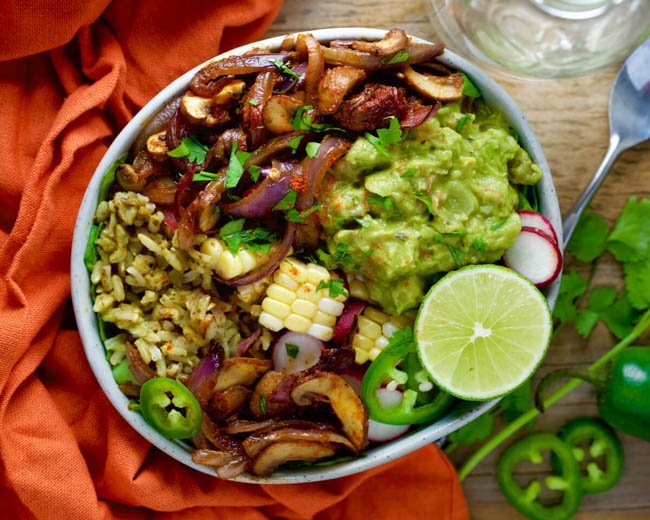
    We’re kicking off today with this insanely delicious and colorful Mexican Vegetable Rice Bowl. If you ask me what my favorite kind of cuisine is, without fail the answer will always be Mexican. I love that there are so many vegetarian options in Mexican cooking. There’s also so many dishes, leaving little room for food boredom. This recipe is inspired by Mexican cooking, and it’s basically a bunch of really great ingredients packed into a super filling bowl.

    The base of this bowl is brown rice mixed with black beans. Brown rice is a whole grain, that paired with protein-rich black beans, creates a powerful base to our bowl. Since this recipe makes 2 servings, you can enjoy this with someone or save the rest for the next day.
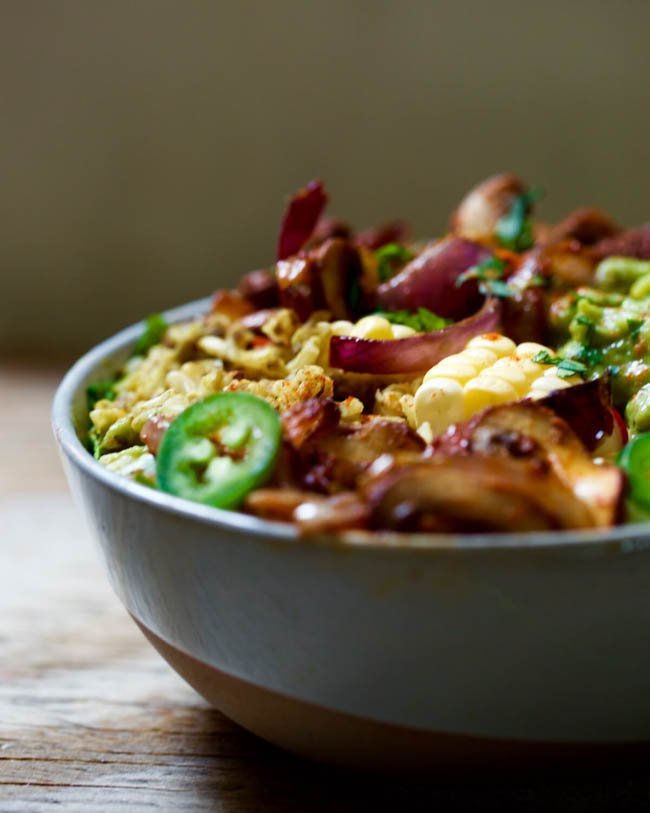
    Let’s get started on our recipe. In a small pot, bring 2 1/2 cups water to a boil, add the rice, apply the lid, and cook over low-medium heat for 40-45 minutes, or until rice is tender. If the rice is not fully cooked, add a few tablespoons of water, as needed. While that’s happening, add 1/2 of the beans, chipotle sauce, and 1 tablespoon of water to a blender. Blend and combine with the other 1/2 cup of beans. Set aside

    Now let’s do our mushrooms. Heat the olive oil, and add the onions and spices. Sauté over medium heat for 2-3 minutes, and then add the mushrooms. Cook with the lid on for 3-5 minutes, or until golden brown. Set aside. Once the rice is done, add the black bean mixture into the rice and mix well with a spoon. Add salt to taste.
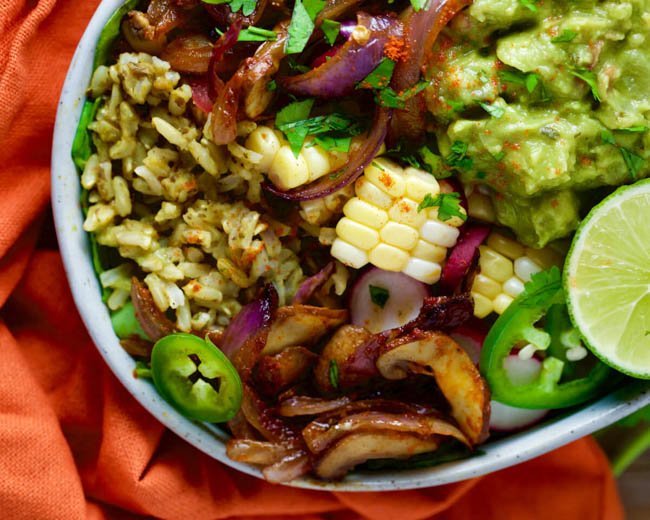
    Now for the fun part…let’s assemble our bowl! Start by adding the black bean rice to your bowls, then add the mushroom sauté, then the vegetables, guacamole, and fresh cilantro for the finishing touch. For the guacamole, you can whip up your favorite recipe. We also included a simple guacamole recipe below, or you also have the option of preparing our Kale Guacamole recipe. It’s up to you! 

    I hope you take a stab at this recipe- it’s seriously delicious. Make sure to tag us in any food pics you take of this dish, and we’ll catch you soon. xo

    Print
    Mexican Vegetable Rice Bowl
    Servings: 2
    Ingredients
    For the rice
    • 1 cup of brown rice
    • 1 cup cooked black beans
    • 1 tablespoon chipotle sauce
    • Salt, to taste
    For the mushrooms
    • 1 tablespoon olive oil
    • 1/2 small onion, sliced
    • 1/2 teaspoon cumin
    • 1/2 teaspoon paprika
    • 1 cup button mushrooms, sliced
    For the veg toppings
    • 2 small radishes, sliced
    • 4 cherry or grape tomatoes, sliced
    • 1/2 jalapeño, de-seeded and sliced
    • 1/2 cup corn
    • 1/2 cup guacamole
    • Fresh cilantro for topping
    Instructions
    1. In a small pot, bring 2 1/2 cups water to a boil, add the rice, apply the lid, and cook over low-medium heat for 40-45 minutes, or until rice is tender.
    2. If the rice is not fully cooked, add a few tablespoons of water, as needed.
    3. While that's happening, add 1/2 of the beans, chipotle sauce, and 1 tablespoon of water to a blender. Blend and combine with the other 1/2 cup of beans. Set aside
    4. Now let's do our mushrooms. Heat the olive oil, and add the onions and spices. Sauté over medium heat for 2-3 minutes, and then add the mushrooms. Cook with the lid on for 3-5 minutes, or until golden brown. Set aside.
    5. Once the rice is done, add the black bean mixture into the rice and mix well with a spoon. Add salt to taste.
    6. Now it's time to assemble our bowl. Start by adding the black bean rice to your bowls, then add the mushroom sauté, then the vegetables, guacamole, and fresh cilantro for the finishing touch. Enjoy!
    Recipe Notes

    If you're looking for a simple guacamole recipe, mash together the below ingredients:
    1 avocado
    1/2 lime
    1/2 jalapeño, deseeded & chopped
    1/4 small red onion, chopped
    1/4 cup tomatoes, chopped
    Salt to taste
    Filed Under: Main Courses

    Veggie Collard Wraps w/ Peanut Sauce

    August 28, 2017 by Wendy Leave a Comment

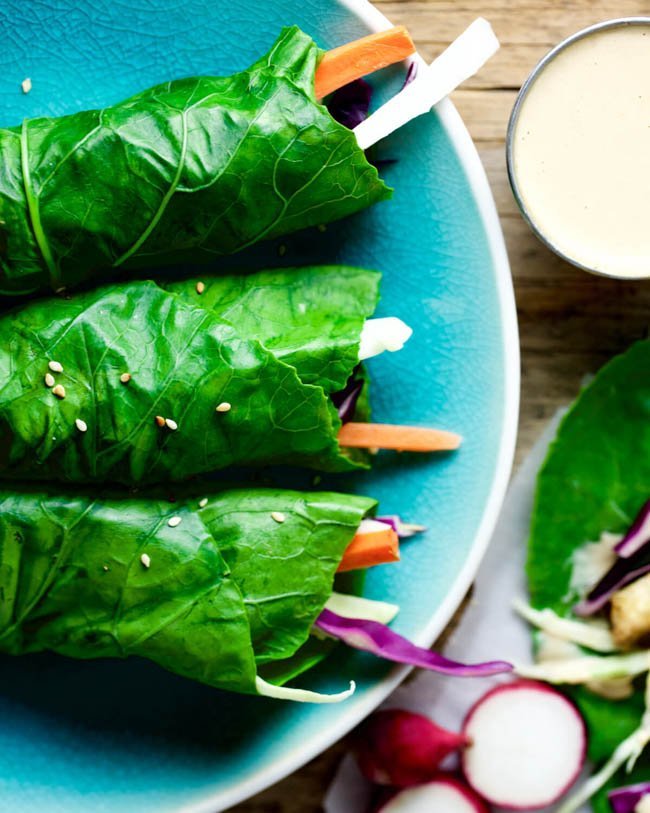
    Looking for a new lunch recipe? These Vegetable Collard Wraps with Peanut Sauce will hit the spot and make for a simple and tasty lunch, dinner (or appetizer!) They’re super fun to make with the kiddos too! 

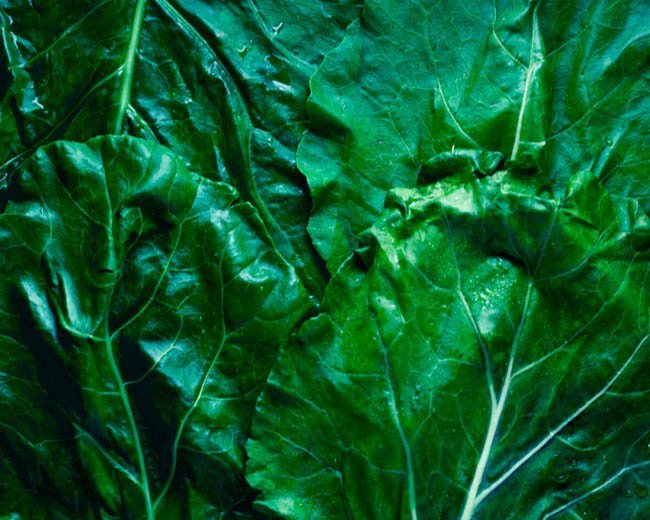
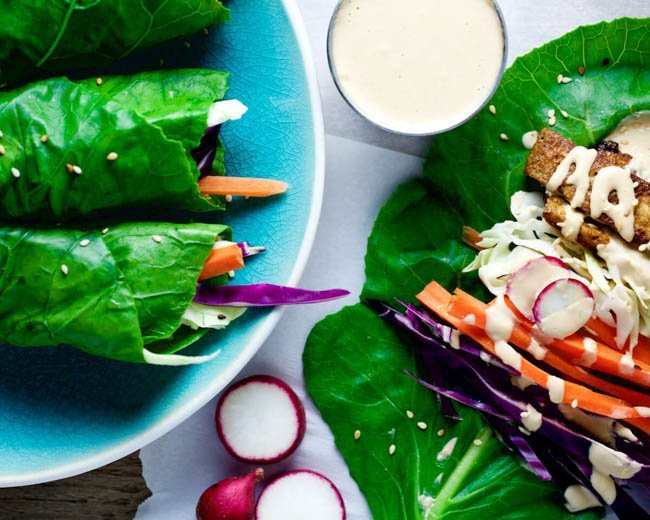
    Collard wraps are the new and improved version of lettuce wraps. They’re much better because they have more structure than lettuce, which makes them perfect for holding your veggies in nice and tight kinda like a burrito. Collards are a phenomenal source of vitamin A, vitamin K, vitamin C, and folate. Think of these wraps as a nutrition powerhouse wrapped into beautiful green leaves.

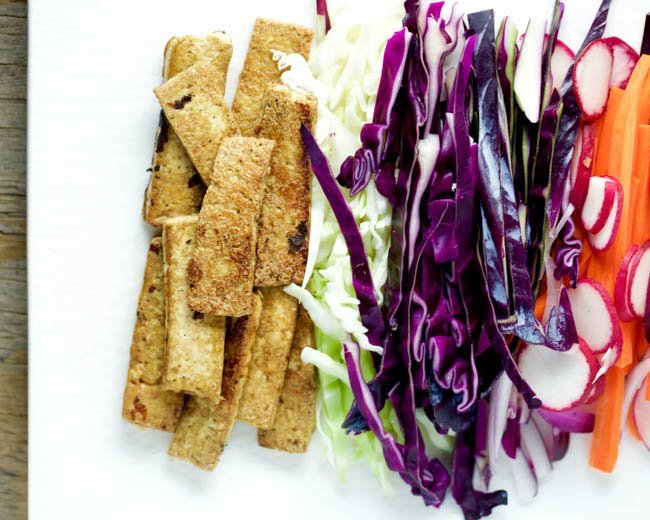
    The best part about these wraps is that you can really stuff them with your favorite foods. We used carrots, radishes, cabbage, and tofu but we encourage you to get creative! Use vegetables that are in season or that you have on hand. Make sure you balance out with a protein- we used tofu, but feel free to add hummus or any other pureed legume. Aside from adding a creamy finishing touch, the peanut sauce adds healthy fats and fiber to this already super nutritious wrap.


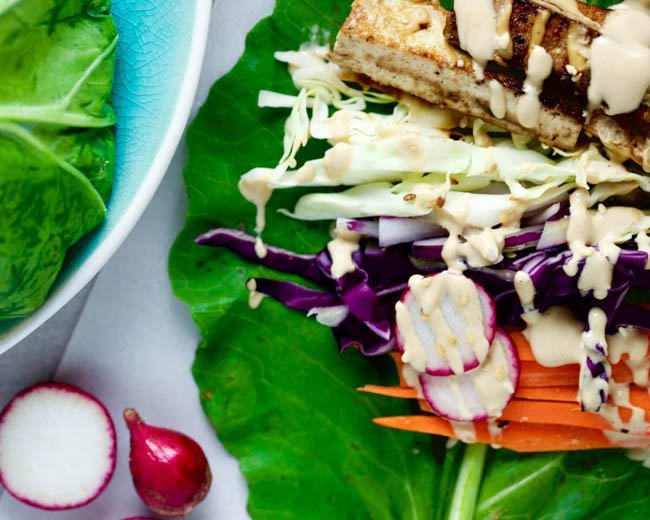
     Let’s get these babies started. For the peanut sauce all you need to do is blend all ingredients together. Easy enough! For the wraps, begin by heating the sesame seed oil in a pan and cook the tofu on each side for 1-2 minutes, or until golden. Next, steam the collard leaves for 30 seconds. Be careful not to oversteam, as you want the leaves pliable but firm. Remove immediately from the steamer, and place on a plate to allow to cool. Cut the tough stem ends off each leaf. Then, assemble each leaf by positioning the top of the leaf up, and the stem down. Center the rest of the ingredients for the wraps onto each leaf horizontally, and portion evenly so there’s enough for each leaf. Drizzle the peanut sauce onto the ingredients, and wrap from bottom to top, like you would for a burrito. Enjoy!

    We’re all about recipes that require minimal time in the kitchen and still taste delish (like these Vegetable Collard Wraps with Peanut Sauce). What are your favorite veggies to throw in a wrap? Hit us up with a comment to let us know what you think! xoxo

    Print
    Vegetable Collard Wraps with Peanut Sauce
    Ingredients
    For the wraps
    • 1 tablespoon sesame seed oil
    • 1/4 block firm tofu, cut into 1" strips
    • 4 large collard leaves
    • 1 medium carrot, thinly sliced
    • 1/4 cup red cabbage, thinly sliced
    • 1/4 cup white cabbage, thinly sliced
    • 1 radish, sliced in rounds
    • 1/4 small red onion, chopped
    • Optional: Sesame seeds
    For the peanut sauce
    • 1/4 cup peanut butter
    • 1 tablespoon tahini
    • 1/2 tablespoon tamari
    • 1/2 cup water
    Instructions
    For the peanut sauce
    1. Blend all ingredients together
    For the wraps
    1. In a pan, heat the sesame seed oil and cook the tofu on each side for 1-2 minutes, or until golden

    2. Next, steam the collard leaves for 30 seconds. Be careful not to oversteam, as you want the leaves pliable but firm
    3. Remove immediately from the steamer, and place on a plate to allow to cool. Cut the tough stem ends off each leaf
    4. Next, assemble each leaf by positioning the top of the leaf up, and the stem down
    5. Center the rest of the ingredients for the wraps onto each leaf, horizontally. Portion evenly so there's enough for each leaf

    6. Drizzle the peanut sauce onto the ingredients, and wrap from bottom to top, like you would for a burrito. Enjoy!

    Filed Under: Appetizers, Salads, Sides

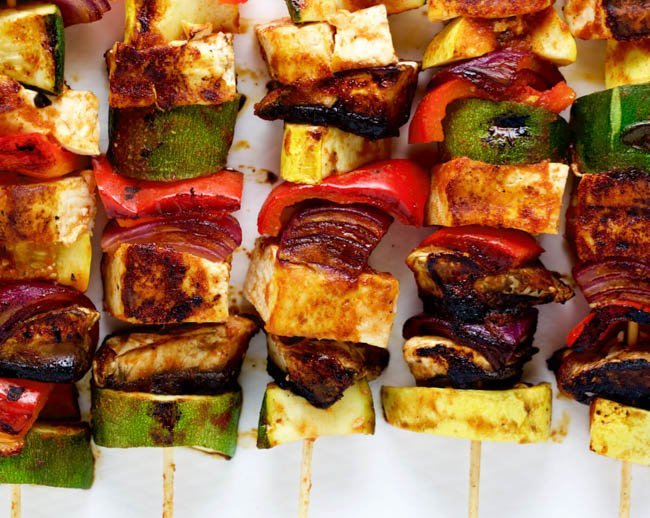
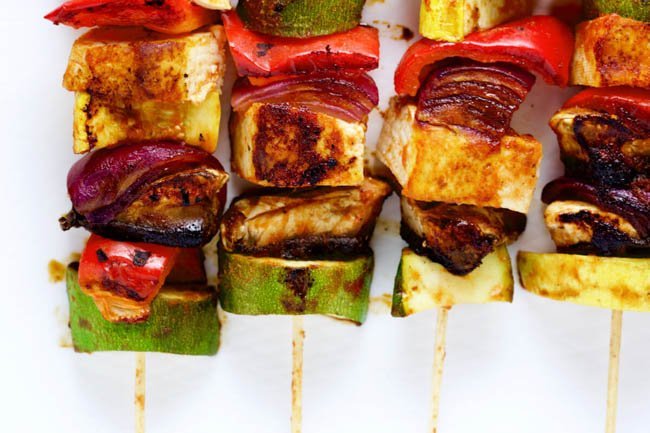
    Summer BBQ Tofu Vegetable Kebabs

    August 23, 2017 by Wendy Leave a Comment

    Take advantage of what’s left of summer cookouts with these mouthwatering Summer BBQ Tofu Vegetable Kebabs. 

    Vegetables are plentiful throughout the summer- one of the reasons this is our favorite season. Kebabs are fun because you can truly use whatever hardy vegetables you have around. We love zucchini, peppers, and juicy red onions to create a dynamic flavor. Pair that with some delicious BBQ tofu for a flavor boost. As many of you may know, tofu is made from curdled soy milk that the water has been removed from. It can be fairly bland so it is great for marinating and flexible for whatever flavors you want to add. Tofu can have a meat like texture that makes it a perfect sub for BBQ meat. It is a great source of protein and provides a healthy dose of calcium and manganese.

    This recipe comes with a homemade BBQ sauce. Many store-bought BBQs have a lot of added sugar and other unrecognizable ingredients. We added cayenne pepper for some spice, and so depending on how spicy you like things, you can decide home much of the cayenne you want in there. 

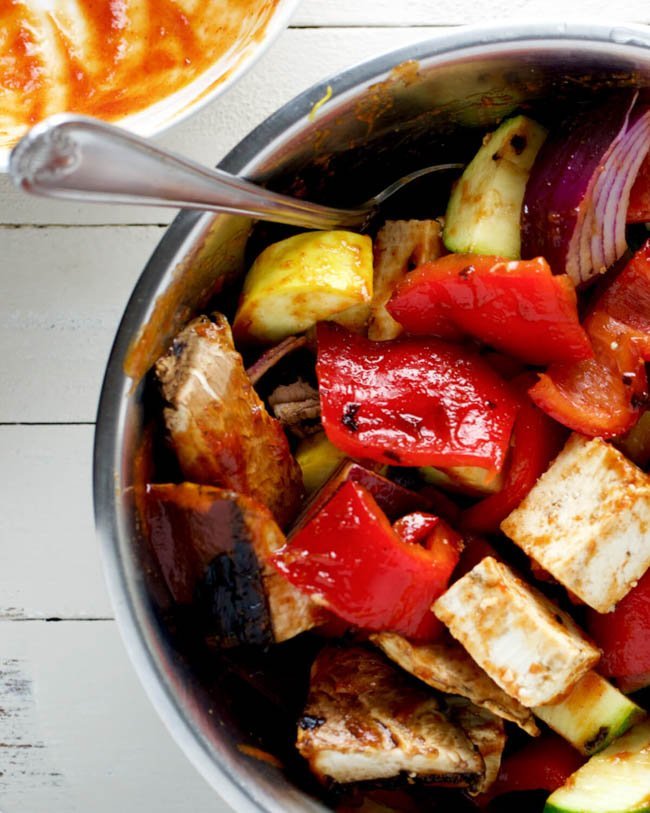
    Let’s walk through the quick and easy steps for these kebabs! To make our simple BBQ sauce, add the sauce ingredients to a small sauce pan, and cook them over low heat for 5 minutes. Set aside. Make sure to drain the liquid from the tofu. This way the tofu can absorb more of the BBQ flavors. Next, add all of the kebab ingredients into a bowl. Pour the BBQ sauce into the bowl, and using a spoon (or your hands) coat all of the vegetables and tofu evenly. Let it marinate for 20 minutes, and then start threading the tofu and vegetables onto the skewers.

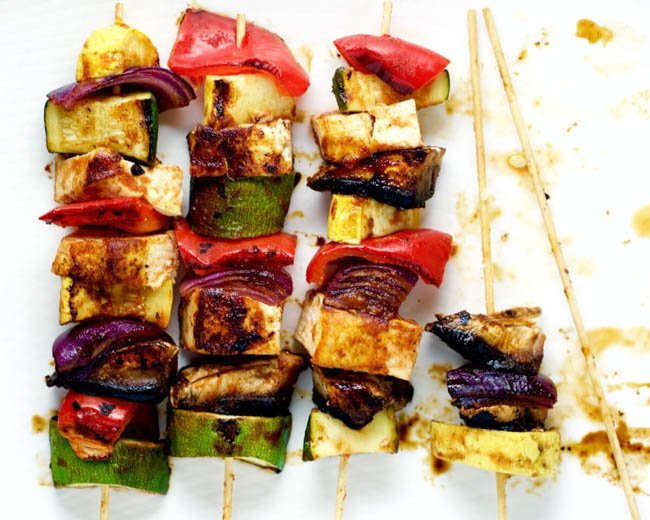
    I recommend adding a firm vegetable, like zucchini to the most bottom layer, so the kebab remains in tact. If using wooden skewers, soak them in water for 20 minutes to prevent the sticks from burning. You should have 5-6 skewers layered and ready to be grilled. We recommend putting these on a sheet of aluminum paper for easier clean up and to prevent sticking. You can either cook on an electric home grill like we did for 5-10 minutes, or until deep brown. If using an outside grill, cook for 7-10 minutes, or until deep brown. That’s it! Enjoy with your friends and fam!

    How many of you love kebabs as much as we do? Which veggies do you like with yours? Try these Summer BBQ Veggie Tofu Kebabs out and let us know what you think of them in the comments below! xo

    Print
    Summer BBQ Tofu Vegetable Kebabs
    Ingredients
    For the kebabs
    • 1/2 block firm tofu, pressed and sliced into 1" large chunks
    • 1/2 small green zucchini, cut into 1" large chunks
    • 1/2 small yellow zucchini, cut into 1" large chunks
    • 1/2 medium red bell pepper, cut into 1" large chunks
    • 1 medium portabella mushroom, cut into 1" large chunks
    • 1/2 medium red onion, quartered and cut into 1" chunks
    For the BBQ Sauce
    • 1/3 cup ketchup
    • 2 tablespoons maple syrup
    • 1/2 teaspoon cumin
    • Cayenne pepper to taste
    Instructions
    1. To make our simple BBQ sauce, add the sauce ingredients to a small sauce pan, and cook over low heat for 5 minutes. Set aside
    2. Next, add all of the kebab ingredients into a bowl
    3. Pour the BBQ sauce into the bowl, and using a spoon (or your hands) coat all of the vegetables and tofu evenly
    4. Let sit for 20 minutes, and then start threading the tofu and vegetables onto the skewers
    5. I recommend adding a firm vegetable, like zucchini to the bottom layer, so the kebab remains in tact

    6. If using wooden skewers, soak them in water for 20 minutes to prevent the sticks from burning. You should have 5-6 skewers layered and ready to be grilled

    7. We recommend putting these on a sheet of aluminum paper for easier clean up and to prevent sticking
    8. You can either cook on an electric home grill like we did for 5-10 minutes, or until deep brown. If using an outside grill, cook for 7-10 minutes, or until deep brown. Enjoy with friends!

    Filed Under: Appetizers, Salads, Sides

    Choosing Safer Beauty & Body Products

    August 14, 2017 by Wendy Leave a Comment

    Today we’re going to be talking about natural beauty and body products. This topic has become increasingly popular, and since what we use on our bodies impacts our health, I thought it would be great to make this topic an episode. We’re chatting with Megan Roosevelt, who’s a registered dietitian and the founder of Healthy Grocery Girl. I came across Megan on the interwebs, and saw that she had written a few pieces on naturalizing your beauty pantry. I absolutely love her site, articles, and recipes, and so it’s such a treat to have her chat with us about this topic today! 

    Here’s an overview of what we covered: 

    1. Why is it important to watch out for what ingredients we put on our body (lotions, makeup, soaps, etc)?
    2. What exactly is considered natural in cosmetics?
    3. Key ingredients to avoid when choosing makeup & some of the major ingredients to avoid in body care products
    4. Practical tips for introducing safer products
    5. Helpful nutrition tips for healthy skin & more! 

    Resources mentioned:

    Environmental Working Group Cosmetics Guide 

    To learn more about Megan, read below and check out her awesome website here! 

    Megan Roosevelt is a Registered Dietitian Nutritionist, founder and CEO of Healthy Grocery Girl® and the host & producer for the #1 Family Friendly Dietitian Channel on YouTube with over 3 million total views. Her realistic, fun & genuine approach to healthy living has cultivated a loyal online following & community. She is an internationally published author, host, producer, as well as a nutrition expert for television and magazines. Megan lives in sunny Los Angeles, California with her husband & business partner, Aaron Roosevelt. Healthy Grocery Girl® is a wellness website & video production company helping busy people and families enjoy real food and natural living. Healthy Grocery Girl keeps it simple and fun with weekly online videos and an online wellness membership providing nutrition programs, video courses & shopping guides. Healthy Grocery Girl also provides video production & social media services for health and wellness brands. 


    Filed Under: Podcast

    Reducing Inflammation: A Lifestyle Approach

    August 7, 2017 by Wendy 2 Comments

    Today we’re talking inflammation and why an anti-inflammatory diet is so important for good, long term health. An anti-inflammatory diet sometimes gets lumped in with a lot of fad diets, but this one actually holds some truth.

    Inflammation is the body’s own way to heal itself by fighting injury and infection. Which is great for when we’re sick, but not so great when the body turns on itself. In some cases, inflammation can happen when the immune system attacks the body’s healthy cells leading to autoimmune diseases like rheumatoid arthritis, Crohn’s disease, and other chronic conditions. Research has also shown that long term inflammation may play a role in the development of diseases like diabetes and heart disease. Some food and lifestyle behaviors have been shown to turn the inflammatory process on, while others can turn it off. 

    In this article we will explore 5 diet and lifestyle factors that will help to reduce inflammation:

    1. DIET

    A diet high in refined carbohydrates, trans fats, saturated fats, and omega-6 fatty acids can turn that inflammation on. Same goes for processed foods. The good thing is that studies have shown that a diet high in fruits and vegetables may be one of the best defenses, thanks to their high vitamin, mineral, fiber, and polyphenol (natural plant compounds that have antioxidant properties) content.  All of these work together to help nourish and heal the body.

    So basically, plant-based is life. 

    A diet high in fruits, vegetables, healthy fats, whole grains, and lean proteins has been linked to lower inflammation. Aim to eat 4-5 servings of fruits and vegetables each day. Make sure you keep things varied and colorful…think tomatoes, watermelon, grapes, broccoli, eggplant, zucchini, and other colors in the plant-based rainbow. Get healthy doses of omega-3s from walnuts, olive oil, avocados, and fish. Opt for beans and lentils for a healthy, plant-based protein like in our Hearty Vegetable Lentil Soup.

    Foods high in fiber and probiotics can cut inflammation as well. Experts recommend 25-30 grams of fiber per day to help control blood glucose, regulate bowels, decrease inflammation, and lower cholesterol. We can eat a wide range of fruits and vegetables and whole grains to meet those fiber recs. Probiotics help promote healthy gut bacteria. New research has been showing the importance of gut health for overall health, which is why we want to get our dose of probiotics through yogurt, kefir, kimchi, kombucha, or tempeh. Check out our article on ways to boost gut health. Eating a diet rich in whole grains, lean proteins, and plenty of fruits and veggies is your key to an anti-inflammatory diet.

    2. STRESS

    Stress has been shown to wreak havoc on the body. Experiencing chronic stress has been shown to disrupt our body’s ability to control inflammation. In other words, if we are stressed out all of the time, we might experience increased inflammation. This increased inflammation may increase risk of disease and negatively affect quality of life. Nourish yourself by finding stress relieving activities. This might be yoga, writing, drawing, walking, reading, you name it. Do what you love and slow down.Take time for genuine self care. Need a bit more guidance? One of our favorite (free!) meditation apps is Insight Timer, which includes over 2 million guided meditations. 

    3. SLEEP

    Sleep plays an important role in the inflammatory response. Research has shown that when we do not get enough sleep, the inflammatory response is kicked into gear and turns against our healthy tissues and organs. Missing out on sleep night after night can also increase our risk for many chronic conditions like heart disease, hypertension, and diabetes. Aim for 7-9 hours of sleep per night to ensure quality rest that will allow your body to function in a happy and healthy way. If you need help getting to sleep on time, consider setting a bedtime alarm 30 minutes before you want to start “winding down.”

    4. EXERCISE

    We all know that physical activity is important, but let’s add anti-inflammatory benefits to the list. Recent research has shown that 30 minutes of movement a day can decrease inflammation. And try to stop thinking of exercise as punishment. Movement can be anything that you enjoy. Walking, running, yoga, weight lifting, dancing, and the list goes on. Aim for a minimum of 30 minutes/day and get that blood pumping in any way that you can. Our favorite fitness apps are Sworkit, Couchto5K and ToneitUp. 

    5. HERBS & SPICES 

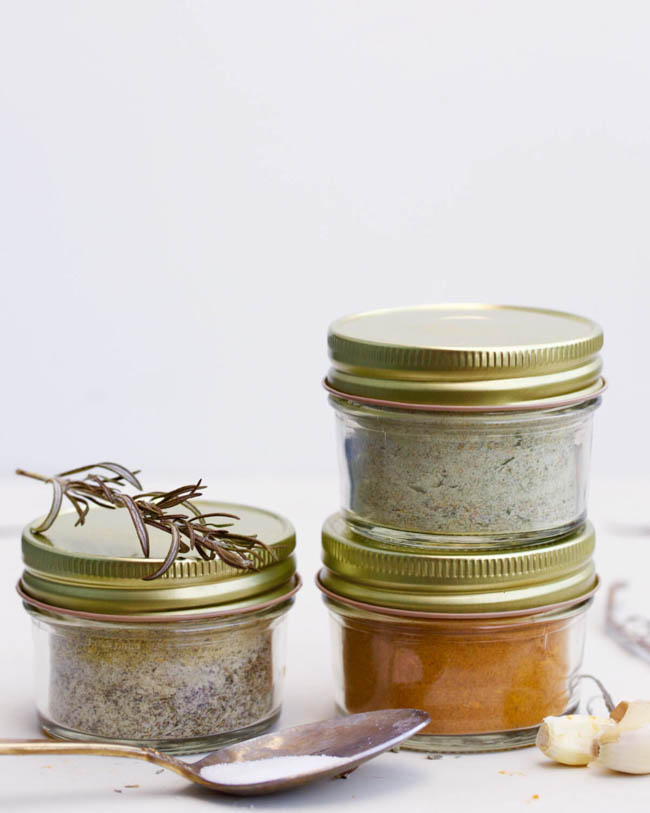
    Many cultures have used herbs and spices as natural remedies for inflammation for centuries. Some herbs and spices that have been linked with anti-inflammatory properties are cinnamon, turmeric, garlic, and ginger. Season recipes with these delicious herbs and spices to enhance the flavor and reap the health benefits. In addition to herbs and spices, teas have also been shown to have anti-inflammatory effects. Incorporate green tea into your regimen..here’s our Refreshing Mango Green Tea Smoothie! We also love this warming Golden Milk Latte recipe (so goooood). Need inspo for spices? Try our spice mix recipes here. 

    THE TAKE HOME?

    Chronic inflammation tends to be an underlying condition that is often overlooked. By incorporating a healthy and balanced diet with movement, sleep, and relaxing activities, you can lower your risk for chronic inflammation. The beautiful thing about eating plant-based is that aside from helping to reduce inflammation, you lower your risk for so many other chronic illnesses.

    Try incorporating some of these tips into your routine and let us know what you think in the comments below!

    Filed Under: Articles

    Q&A Minisode: Should I Take a Multivitamin?

    August 2, 2017 by Wendy Leave a Comment


    To supplement or not to supplement…that is the question here and a really good one. With supplements being on the rise, it can be super confusing to figure out whether supplementing is right for you. It’s even more confusing figuring out what supplements you should take. Generally speaking, we always recommend getting nutrients from whole foods versus supplements. How can you do this? By eating a variety of different foods- think vegetables, grains, proteins, fats, nuts & seeds. Variety is super important here, because let’s say you stick to kale every single day because it’s such a healthy veg, you can miss out on all the wonderful nutrients that other veggies offer.

    With that being said, there may be times when supplementing is appropriate. However, this is something that should be assessed well because nowadays, we see a lot unnecessary and even unsafe supplementation. People at a higher risk for nutrient deficiencies should definitely be considered for supplementation. Examples are pregnant women, the elderly, people with food allergies or intolerances, people suffering from certain gastrointestinal diseases, and vegans or vegetarians.

    Now, you don’t necessarily have to be at risk for deficiencies to consider taking a supplement. There are certain conditions that may be improved by taking a particular supplement. For example, patients who suffer from inflammation, have elevated triglycerides, or are at a high risk for heart disease, may benefit from an omega-3 supplement. Alternatively, I have tons of patients who take a vitamin b-complex supplement for nails, skin, and hair. Is it helpful? Perhaps. Multivitamins and other vitamin & mineral combinations are generally safe, as long as the values aren’t through the roof. I’ve seen supplements that have over 1000% of a given nutrient, and I stay as far away from those as possible. To put this into perspective, 100% is the recommended daily value of that given nutrient- if you’re getting 1000%, you’re getting 10 times that amount. Since supplements are loosely regulated, the safety of a lot of these products has not been extensively tested.

    With that being said, you have a few options. You can have your doc order tests to determine if taking a supplement is right for you based on any existing deficiencies. You can also just take the supplement anyways, and in that case, I would recommend that you try to stick as close to the 100% daily value range as possible. Always keep in mind though that real food contains all types of wonderful things that a pill would never offer us. If you’re still unsure about whether taking a multivitamin or supplement is right for you, I say consult with a doctor or RD.

    You can also use this site to choose supplements. They conduct independent testing of supplements based on label accuracy, product purity, nutritional value, ingredient safety, and projected efficacy. I love this site because they also provide a ranking for each product based on quality AND value- which helps you choose a good product that is also within your budget.

    Now on a more personal note, I’m going to go over some of the supplements that I take, and some of the one’s Jess takes as well. This isn’t a green light to take these- I just want to put into perspective the why behind the supplements we take.

    So for me, the list is pretty basic.

    • Vitamin D:

    Living in NYC, it can be challenging to get enough sunlight (which results in Vitamin D synthesis). I take 1000 IU (600 dv) of Vitamin D3 capsule daily.

    • Probiotics:

    Because of my history with chronic constipation, I regularly take a probiotic supplement. Check out our full post about why probiotics are awesome, here.

    [line]

    Now for Jess, she also takes Vitamin D & a daily probiotic. Others include:

    • Vitamin B12:

    She eats mostly vegan, and it can be challenging to get enough B12 from plant-based foods.

    • Selenium:

    She takes this for thyroid support because thyroid disease runs in her family and she has hashimotos, which is an autoimmune disorder where your body attacks your thyroid.

    Alright, I hope I answered your questions and thank you so much for taking the time to send us your question. If you like what you heard, make sure you give us some likes & reviews on iTunes and stitcher– it helps more people find us. And we would love it if you sent your questions over to us so we can record them into a mini-episode like this one. Simply go to our podcast tab, and record at the top of the page. You can also ******************@***il.com“>email us your recording. Thanks for tuning in! 

    Resources mentioned:

    What Supplements We Take & Why

    LabDoor

    Filed Under: Podcast

    • « Go to Previous Page
    • Page 1
    • Interim pages omitted …
    • Page 72
    • Page 73
    • Page 74
    • Page 75
    • Page 76
    • Interim pages omitted …
    • Page 96
    • Go to Next Page »

    Primary Sidebar

    Search

    Let’s Connect

    Meet Wendy & Jess

    Registered Dietitians & BFF's. We're probably busy eating right now.

    Subscribe to our Podcast

    food heaven podcast

    Podcast Hookup Codes

    food heaven podcast hookup codes

    Meet Wendy & Jess

    Registered Dietitians & BFF's. We're probably busy eating right now.

    • Diabetes Digital
    • Our Story
    • Recipes
    • Resources
    • Articles
    • Contact
    • Policies
    © Food Heaven Made Easy
    In order to provide you with the best service, our website uses cookies. By continuing to browse the site you are agreeing to our Privacy Policy I consent
    Privacy Policy

    Privacy Overview

    This website uses cookies to improve your experience while you navigate through the website. Out of these cookies, the cookies that are categorized as necessary are stored on your browser as they are essential for the working of basic functionalities of the website. We also use third-party cookies that help us analyze and understand how you use this website. These cookies will be stored in your browser only with your consent. You also have the option to opt-out of these cookies. But opting out of some of these cookies may have an effect on your browsing experience.
    Necessary
    Always Enabled
    Necessary cookies are absolutely essential for the website to function properly. This category only includes cookies that ensures basic functionalities and security features of the website. These cookies do not store any personal information.
    Non-necessary
    Any cookies that may not be particularly necessary for the website to function and is used specifically to collect user personal data via analytics, ads, other embedded contents are termed as non-necessary cookies. It is mandatory to procure user consent prior to running these cookies on your website.
    SAVE & ACCEPT