
Science can be confusing.
Take organic vs. conventional produce for example. For most of us, it can be hard to sift through the mounds of (sometimes conflicting) research to know which growing practices are best.
The media doesn’t help. For example, headlines may say that conventional produce is better than organic on Monday, and then exclaim that consuming GMO foods are going to kill your unborn baby on Tuesday. Who can keep up?
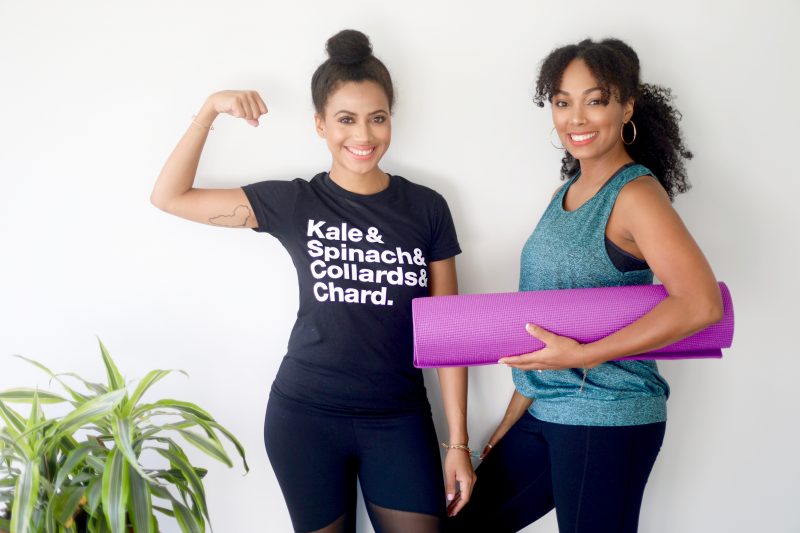
Today we sit down with one our favorite dietitians, Whitney English Tabaie, who is the QUEEN of nutrition science. Whitney’s mission is to help people make educated decisions about the food they eat by providing evidence-based information on popular nutrition topics. In this episode, Whitney navigates the sticky world of pesticides and lets us know whether or not we have to really spend the extra money to buy organic.
Whitney is a Registered Dietitian Nutritionist, Certified Personal Trainer, and founder of the website and YouTube channel, Whitney E. RD. Whitney’s mission is to help readers make educated decisions about the food they eat by providing evidence-based information on popular nutrition topics and sharing healthy original recipes that fit her “Predominantly Plant-Based” nutrition philosophy. She has been featured on outlets like Good Day LA, Bon Appetit, People, Today’s Dietitian, Buzzfeed, Huff Post, Men’s Health, Shape, Reader’s Digest, and many more. When she isn’t whipping up healthy meals in “Whit’s Kitch,” she can be found soaking up the Los Angeles sun with her pup, Mr. Chow.

In this episode, we’ll cover:
- What exactly organic and non-GMO means
- The latest research on GMO and pesticides
- Concerns and health implications of their uses
- Regulations on pesticide use
- How you can limit exposure to pesticides and GMO’s
Resources:


How to submit a question: It’s easy! Simply record your question on the voice memo of your phone and email it to us at in**@****************sy.com. We’ll try our best to answer your question on an upcoming episode (and we’ll be sure to email you when we feature your question).
Can you do us a huge favor? If you enjoyed this episode, please do us a huge favor and leave us a review on iTunes ….right now. The more reviews we get, the higher we are ranked in iTunes, which means we reach more people!
How to subscribe:
- iTunes (apple)
- Google Play (android)
- SoundCloud (both)
Connect with us online:
- Instagram @foodheaven
- Twitter @foodheavenshow
- Facebook @foodheavenmadeeasy
- Pinterest @foodheavenmadeeasy
Our podcast is released every Wednesday. In each episode, we cover tips and tricks for making lifelong sustainable healthy living changes to upgrade your diet and health. We also interview leading experts in the field of health and nutrition to pick their brains on how to cultivate a healthy life that you love. We hope you enjoyed this episode, and we’ll catch you next time!
PODCAST TRANSCRIPT:
Wendy Lopez:
Hey, it’s Wendy.
Jessica Jones:
And it’s Jess. And you’re listening to the Food Heaven Podcast.
Wendy Lopez:
Your online resource for delicious and nutritious living.
Wendy Lopez:
This episode is sponsored by Dream Cloud, an affordable and luxury mattress company that provides all the support and comfort you need to ensure you’re getting the best sleep possible. Dream Cloud mattresses have an eight layer construction and are made with cashmere blend cover materials so that you can live your best life while getting in those Zs.
Wendy Lopez:
I actually have a Dream Cloud mattress myself and it is literally everything. It hugs in all the right places when I lay down. And the best part is that thanks to the cooling system that’s integrated into the mattress I don’t feel hot and sweaty while I’m sleeping. Go to Food Heaven Made Easy.com/Dream right now and use the code Food to get $200.00 off your Dream Cloud mattress.
Wendy Lopez:
You’ll be able to try out the mattress for a whole year, you all. And if you’re not satisfied, no questions asked, dream Cloud will give you a full refund and we’ll come and pick up your mattress. Again, Food Heaven Made Easy.com/Dream and use the code Food to get $200.00 off your mattress. We’ll also include the link in the show notes. Let’s get into our episode.
Wendy Lopez:
Hey everyone, thank you so much for tuning into another episode of the Food Heaven Podcast.
Jessica Jones:
Hey.
Wendy Lopez:
Today we’re talking with our girl Whitney English. Registered dietitian, certified personal trainer, and the founder of the website YouTube channel, which we are fan girls over here-
Jessica Jones:
Totally.
Wendy Lopez:
… Whitney ERD. Whitney’s mission is to help readers make educated decisions about the food they eat by providing evidence-based information on popular nutrition topics and sharing healthy original recipes that fit her predominantly plant-based nutrition philosophy.
Wendy Lopez:
She’s been featured on outlets like Good Day LA, Bon Appetit, People, Today’s Dietitian, Buzzfeed, Huff Post and many many more. On her YouTube channel, you can find Whitney whipping up delicious recipes and breaking down the science behind confusing nutrition topics like this one that we’re going to talk about today.
Jessica Jones:
Yeah. So today we have a really good topic that is super confusing and we’re going to talk all about organic and non-GMO foods. GMO versus non-GMO. Should we be eating them? Are they safe? What does science have to say? And we have seen the chaos and confusion that these labels can create. And oftentimes consumers like you are left feeling like they can’t eat anything with a peace of mind. So without further ado, let’s get started. Hi, Whitney.
Whitney English:
Hi. Thank you guys so much for having me.
Wendy Lopez:
Of course, we-
Jessica Jones:
Yes. We love you.
Wendy Lopez:
… absolutely … Yeah.
Whitney English:
I’m a big fan girl as well of the podcast and everything, so-
Jessica Jones:
Aw, thank you.
Whitney English:
… excited to be here today.
Jessica Jones:
Yeah. So we’re going to jump right in. So my first question is, what’s been your experience with consumers as it relates to the whole organic/non-GMO, GMO topic? Are people usually confused or are they anti these foods?
Whitney English:
Yes.
Jessica Jones:
Yeah, give us a breakdown.
Whitney English:
Yes, confused. Confused is the main word that I hear. Even coming from very educated people who are really aware of the food that they’re eating, when it comes to organic and non-GMO, people just don’t really know, in some cases, what exactly it means in the case of GMOs. And in the case of organics, they don’t know about really whether science actually supports the benefits of it.
Whitney English:
So I think consumers really don’t know what to do. And there’s a lot of fear-mongering going on surrounding both of them. So some people, I think feel probably paralyzed at the grocery store trying to choose between all these decisions.
Wendy Lopez:
Exactly. And I think with all the labels too, people just feel very hopeless with their food choices and they feel like everything is out here trying to kill them. So that’s why I’m so excited that we’re talking about this because food should be a very enjoyable experience.
Wendy Lopez:
And yeah, all of these labels kind of just makes things very scary and intimidating and overwhelming. So I want to clear up the confusion and I was wondering if you could get into what this means, specifically organic, non-GMO. Kind of breaking the definitions down in a very basic way.
Whitney English:
Sure. Well yeah, hopefully, we can clear up some of the confusion for people and remove some of that fear. I guess number one is just understanding what they mean. So both organic and non-GMO refer to processes used to create our food.
Whitney English:
So specifically for organic, it refers to crops that have been grown without the use of synthetic chemicals, sewage sludge, irradiation and genetic engineering, which is what refers to GMOs basically. It was created in order to protect the environment and really create sustainability within agriculture.
Whitney English:
So it focuses on things like improving water quality and soil fertility and conserving biodiversity through practices like crop rotation and cover crops. And then when it comes to animal agriculture, it means the animals were raised without the use of antibiotics or hormones. They were fed 100% organic feed and then they’re subject to certain lifestyle conditions like pasture grazing for a certain amount of time per cow for instance.
Whitney English:
Non-GMO, on the other hand, refers to a process that takes genes from one species and inserts it into the DNA of another species. And this is done on plants and animals, and it’s done to improve certain properties. So for example, this year they recently released some apples that were engineered to prevent browning.
Whitney English:
Other practices will increase the nutrient content of certain foods, or in the case of animals, genetically engineered salmon were approved, I think it was last year as well. And they were engineered to grow faster. And anything that is organic is non-GMO. So genetically modified organisms are not allowed in organic agriculture. However, non-GMO does not necessarily mean organic.
Jessica Jones:
Okay. So I guess my next question is, now that you’ve kind of cleared that up, is there a valid case for pesticide use and for GMO foods? Many scientists we know, dietitians, and others in the healthcare industry don’t really see these things as an issue. So what’s your take kind of when it comes to science and is there a reason to be using these techniques?
Whitney English:
Sure. So I mean, it’s a very murky issue and there are pros and cons to both sides of the argument. As an evidence-based dietitian, I can really tease out both of those. So I don’t take too hard of a stand on either side of the fence. But a poll in 2015 for example, showed the 88% of scientists deemed GMOs as perfectly safe.
Whitney English:
Like you said, it’s kind of a huge discrepancy between what the academic world feels and what the public feels. So I’ll try to tease out some of those issues. On one hand, studies have shown that GMO crops can increase yields. A lot of people have … A lot of scientists believe that it is helping to fight world hunger. They increased profits for farmers and in some cases have decreased pesticide use.
Whitney English:
On the other hand for GMOs, in some cases, this actually increased pesticide use. So certain plants are genetically engineered to be herbicide-resistant. And in that case, that means that they can use more of the pesticide glyphosate for instance. These are called roundup ready crops and those are on soy and corn. And basically, since the pesticide roundup doesn’t kill the crop and it only kills the weeds, they can use more of it.
Whitney English:
So that’s an instance where possibly more pesticides are being used, but in other cases with insect-resistant crops, they actually then don’t have to use as many pesticides because now they don’t have to worry about insects attacking the crops. But some of the concerns with that is that it can create what’s called … Where you may have heard the term superbugs? So resistant insects, resistant weeds, resistant viruses.
Whitney English:
And we actually have some evidence that resistant weeds are being created by these roundup ready pesticides, but in other circumstances, for instance the super balance or viruses, that’s largely speculative.
Wendy Lopez:
Well, going into the concerns, because I know you mentioned the salmon came out that grows quicker in size. And just taking off my dietitian hat and listening to that just from like a lay person’s perspective, it’s a little scary. It makes me cringe a little bit. So I’m like, what exactly is happening where the salmon is-
Whitney English:
Exactly.
Wendy Lopez:
.. is kind of getting so big? So I do want to address the concerns because I think that was a great point that you mentioned that such a high percentage of scientists feel safe recommending GMO or nonorganic foods, and then consumers feel the complete opposite. So what does the research have to say about the use of pesticides in our food when it comes to safety and are some of these concerns valid?
Whitney English:
So as far as the pesticides in our food, generally the research shows that the levels that they use are safe for humans. So the EPA actually regulates how much pesticides are allowed to be used on our foods and the WHO sets internationally accepted standards for that as well. However, many of these pesticides are known to be toxic at higher levels. And so while the research doesn’t currently show that the lower amounts cause any harm, we don’t always know.
Whitney English:
So for instance, DDT is a pesticide that was used extensively years ago and has now been banned because eventually they did find out that it was harmful to human health. So that’s the thing, the research doesn’t always catch up to what’s going on in the field exactly. So that’s a concern. There has also been a lot of research recently that’s shown that organics do possibly have improved nutrient profiles compared to conventional foods.
Whitney English:
So some of the recent reviews have shown higher contents of vitamin C. There was an analysis just recently that showed organic fruits and vegetables had higher amounts of phytochemicals and those are the substances in fruits and vegetables that have shown to have antioxidant properties and other beneficial health properties. And that same review showed that organic fruits and vegetables had a 48% lower level of the toxic metal cadmium and four times lower amounts of pesticide residue.
Whitney English:
Earlier reviews however, showed no differences in nutritional composition. And typically we see that the macronutrient composition is similar and often that the micronutrient composition is similar to. So it’s kind of mixed, the research that’s out there.
Jessica Jones:
Right.
Whitney English:
Yeah. And then when it comes to animals, however, with the organic agriculture. Animals that are raised organically tend to have higher amounts of beneficial Omega 3 fatty acids and lower amounts of saturated fat. And that’s been consistently shown in dairy as well as in like grass-fed beef products.
Wendy Lopez:
Okay. And because I know with organic farmers they oftentimes raise the point of organic farming, non-GMO farming being better for the environment. So have you read into any research about that or do you have any thoughts about that topic?
Whitney English:
Yeah. So kind of what we talked about earlier, like some of the claims that are about … As far as the resistant weeds and superbugs, those are still debatable. But there are other environmental impacts like soil enrichment, which I definitely think there’s good research supporting the fact that organic agriculture improves soil quality. Which could be one of the many reasons potentially that organic produce tends to have more of these beneficial compounds.
Wendy Lopez:
So one thing that we get from patients a lot is they get worried like we said that it has to be organic, it has to be non-GMO. And they’re working with a limited budget. And so the takeaway that they get from the media is that if I’m not going to do organic fruits and vegetables produce, then I’m not going to do any produce at all.
Wendy Lopez:
And so my question is, are the risks of pesticides outweighed by eating conventional whole foods? So in other words, should people be avoiding fruits and vegetables if they’re not organic?
Whitney English:
Right. Absolutely not. So while the research does potentially … It’s mixed, like we just talked about on on the use of pesticides. And we can talk more a little bit about the mixed research on GMOs.
Whitney English:
The research that is solid is research on fruits and vegetables. We know that higher consumption of produce leads to longer, healthier lives with less chronic disease. Like that’s undebatable across the board.
Whitney English:
So if it’s between buying conventional produce or buying no produce, I absolutely say go for the conventional produce. If you can eat organic, great, but don’t let that deter you.
Wendy Lopez:
Exactly. And I also wanted to mention that a lot of times when we go to the farmer’s market, because to get that USDA organic label, it’s so, so expensive for farmers. So a lot of times when people do go to the farmer’s market, they can just speak to the farmer and ask them about their farming practices because they might not necessarily use pesticides, but they can’t afford to get the certification. So you’re still getting pretty affordable local organic produce. It just doesn’t have that label on it.
Whitney English:
Exactly. And like certain operations whose gross income is less than $5000.00 a year don’t need to certify in order to sell, label, or represent their products as organic. So talking to people … But they can’t use the organic seal. So talking to people is a good way to really find out what’s going on.
Whitney English:
And some of the research even shows that even when things are organic, they can also tend to have some pesticide residues in some cases because of crossovers from nearby farms. So you’re not always 100% guaranteed that you’re getting a better product. Just because some of the research suggests slight improvements, doesn’t mean it’s all that much better.
Whitney English:
And then additionally, there’s the issue of locality. Like you said, fruits and vegetables, the longer they are out after being picked the more their nutrient profile decreases as far as phytochemicals go. But when you’re getting things that are fresh, they’re probably going to have a higher nutrient profile than something that maybe has been on a truck or shipped overseas.
Wendy Lopez:
Yeah, that’s a great point. And do you know … Are there regulations on GMO? Organic labeling?
Whitney English:
Yeah. So organic is regulated by the USDA. In order to put the USDA organic seal on your product, it must be 95% organic. Or to say that a product is made with organic ingredients, it has to be 70% organic. And like you talked about, companies have to actually apply for these seals and be verified that they are following organic practices. So it’s highly regulated.
Whitney English:
GMOs on the other hand are pretty much not regulated. So in 2016 Obama passed a law that would require labeling, but the terms were very undefined. And so they talked about options like having a 1-800 number on a package or a QR code where consumers could call and find out if the food is non-GMO, but it wouldn’t specifically state it on the package. And that bill gave companies and the government two years to establish set standards.
Whitney English:
So that’s going to be coming up in July of this year and hopefully that’ll get cleared up, because right now there’s just no standards. So there are third party independent companies like the Non-GMO Project, which is a nonprofit organization where companies can apply for verification. And that’s pretty much the best bet you have in verifying if something is GMO if that’s a concern to you, and you can look for that on labels. It has a little butterfly with a green check mark.
Jessica Jones:
Great. That was actually our next question. Was how can people know whether or not their food is organic or non-GMO? So it sounds like with organic it’s typically mentioned certified organic on the label, but there’s a lot of companies who potentially are having organic growing practices that don’t have the budget to necessarily get that certification. So we can have that conversation with our local farmers.
Jessica Jones:
And then with GMO, it sounds like there is no standard right now, but it’s something that is kind of in the process of coming in the next couple of years. Am I saying that correctly?
Whitney English:
Exactly.
Jessica Jones:
Okay.
Whitney English:
Yeah.
Wendy Lopez:
So Whitney, for people that are concerned about limiting their exposure to foods that have pesticides and GMOs, what are some practical things that they can do?
Whitney English:
Well, first off, I’d want to ease anyone’s fears about genetically modified products. At this time the consensus in the scientific community, as I already said, is that they are safe for human health and most of these products have been on the market for a while. Usually the soy, corn. They’ve been tested for many years and seem to have similar nutrition profiles.
Whitney English:
On the flip side, we’re introducing new genetically engineered products onto the market all the time that don’t have as much research to them. And even the fact that GMO products have actually only been on the market altogether since the late nineties. So the data that we have is still up for debate. I mean, the GMO products that are in the market are likely safe, but we really don’t know about the longterm effects or about the effects of new products that are going to be introduced.
Whitney English:
So with that said, if people want to limit their exposure, one, whenever you buy organic, that also means non-GMO. And another good option for buying organic if you are concerned about prices is to look for the environmental working group’s dirty dozen and clean 15 list. So that separates the produce that is most likely to have lower amounts of pesticide residues. That would be the clean 15 list.
Whitney English:
And then their dirty dozen list is their list of produce that is most likely to have higher pesticide residues. And they revise this list every year after testing tons and tons of samples to get these averages. So on the dirty dozen list, for example, that includes foods like strawberries, spinach, nectarines, apples. While the clean 15 list includes things like corn, avocado, pineapple, cabbage.
Whitney English:
And you can see those tends to be the things where you removed the skin before you eat them. So that kind of makes sense that if they were sprayed with a lot of pesticide, you remove the skin, it might have less residue.
Wendy Lopez:
Right.
Jessica Jones:
Mm-hmm (affirmative).
Wendy Lopez:
Yeah, that’s a great tip. And that’s something that we also use as well.
Jessica Jones:
Yeah, we do.
Wendy Lopez:
The dirty dozen and clean 15. So thank you so much for sharing those resources and thank you for your time and your expertise. This information is going to be extremely useful for our listeners and hopefully it will motivate them to make more educated food choices.
Wendy Lopez:
Whitney, tell us about where our listeners can find you and keep up with all the great things that you’re doing.
Whitney English:
Sure. Well, thank you so much for having me guys. You can find more information on my website, which is Whitney ERD.com.
Jessica Jones:
Awesome. Yeah, we’ll also include the links to Whitney’s handles in the show notes. So make sure to go there and we love her show, so you guys really need to subscribe to her channel.
Jessica Jones:
All right. So-
Whitney English:
Aw, thanks guys.
Jessica Jones:
Yeah, so we hope you guys enjoyed this episode. If you did, please do us a huge favor and leave us a review on iTunes right now. The more reviews we get, the higher we’re ranked in iTunes, which means we reach more people. And you guys make sure to connect with us online as well. We are an Instagram at Food Heaven Show and also Twitter, the same handle. And we’re on Facebook at Food Heaven Made Easy.
Jessica Jones:
For those of you who just started tuning in, our podcast is released every Wednesday and in each episode we cover tips and tricks for making lifelong sustainable healthy changes to upgrade your diet and health. We also interview leading experts in the field of health and nutrition to pick their brains on how you can cultivate a healthy life that you love. We hope you enjoyed this episode and we’ll catch you next time. Bye.
Wendy Lopez:
Bye.