• Skip to main content
  • Skip to primary sidebar
Listen to the Latest Podcast EpisodeAnd We’re Back! Introducing: Diabetes Digital
Food Heaven Made Easy

Food Heaven Made Easy

Black Registered Dietitian Nutritionists | Intuitive Eating Dietitians

  • About
  • Press
    • Diabetes Digital
    • Start Here
    • Podcast
      • Hookup Codes
    • Work With Us
    • Resources
      • Recipes
      • Blog
      • Cookbook
      • Books We Love
    Looking for nutrition counseling with expert registered dietitians?
    Get Started

    Wendy

    Pickled Vegetable Black Bean Tostadas

    March 7, 2018 by Wendy Leave a Comment

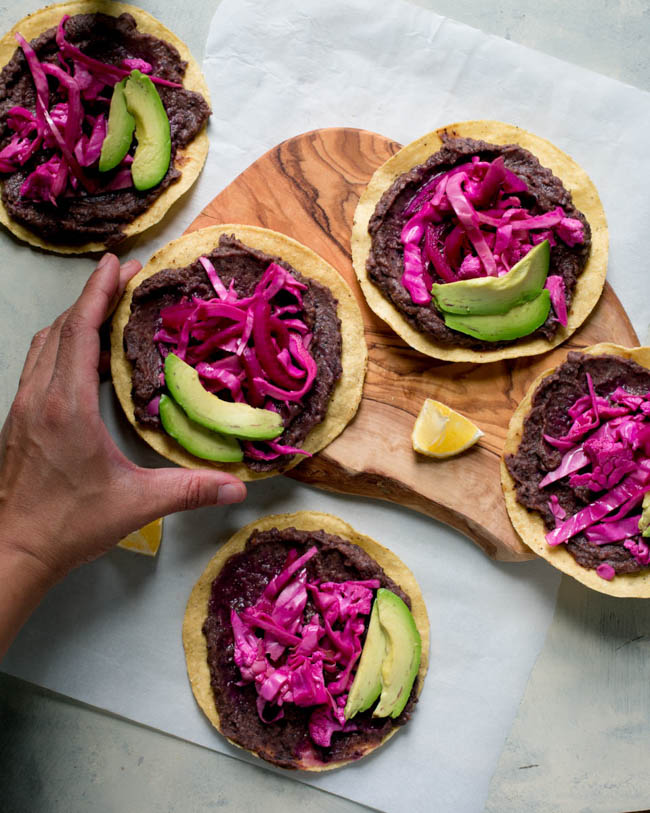
    Say what’s good to these simple Pickled Vegetable Black Bean Tostadas. Pickling veggies can be super easy to do. It adds a dynamic flavor to your dishes, and makes use of any extra veggies you have on hand.
    How many of you have pickled your veggies? Pickling is a way to preserve vegetables by fermenting them in a solution of vinegar that goes far beyond your standard jar of pickles. The quick pickling method we’re doing today is adapted from The Kitchn. You can pickle just about any vegetable. Our favorites are beets, cabbage, cucumbers, onions, asparagus, and peppers. Super fresh vegetables pickle the best so when you have a surplus from your own garden or think that you bought too much, pickling is a sure fire way to ensure you’re not wasting food.

    Once you have your pickled vegetables ready, all that’s left to do is to add them as a topping for your black bean tostadas. Black beans are an excellent source of protein and fiber, which helps keep you satiated for hours. If using canned beans, make sure you rinse them well to remove all that extra sodium. They’re also very cheap, making for a great, low cost protein option.
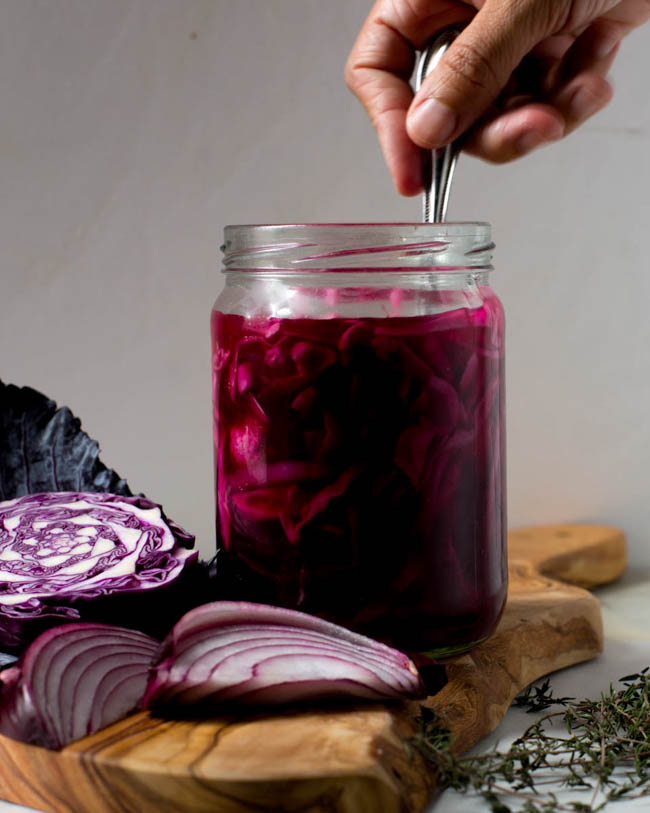
    Let’s get to pickling. In a small pot, bring the vinegar, water, salt and sugar to a boil. Then add the vegetables to a large jar, pack them tightly into the bottom of the jar, and add the hot vinegar/water mix into the jar. Place the lid on tightly, let the jar cool, and leave in the fridge overnight. Keep in mind that the longer you leave the pickled vegetables in the fridge, the more the flavors will develop. Store any leftover pickled vegetables in the jar, in the fridge.
     
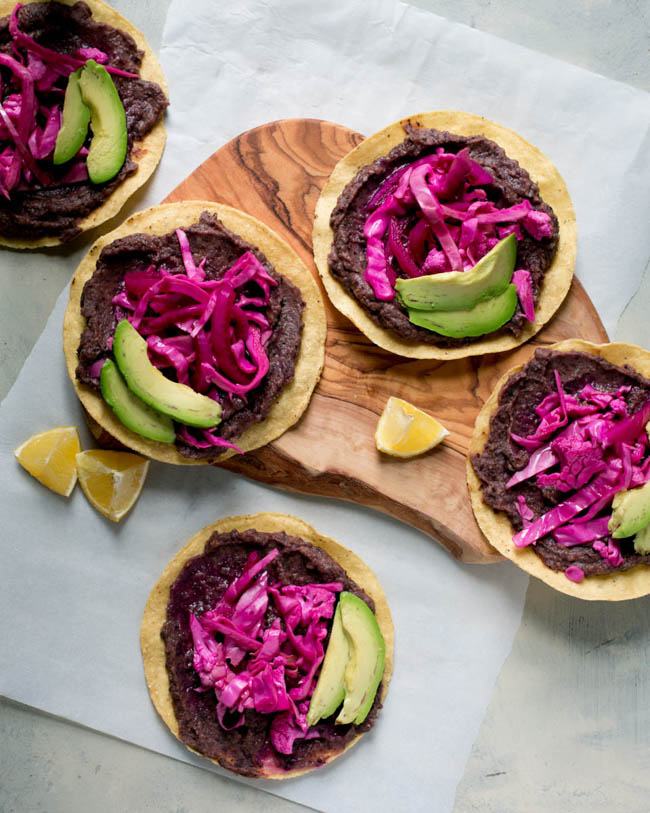
    Now for for the tostadas, begin by blending the beans, sauce, water, and cumin into a consistent paste. Then spread it onto the tostadas. Top with the pickled vegetables and avocado. Enjoy!
     
    This recipe is so easy to whip together when you’re feeling something fresh and quick. Keep a jar of pickled vegetables on hand in the refrigerator and you now have a flavor-packed veg topping for meals. What do you think of our Pickled Vegetable Black Bean Tostadas? Drop us a comment below!
     

    Print
    Pickled Vegetable Black Bean Tostadas
    Servings: 2
    Ingredients
    For the tostadas
    • 15 ounce can or 1 3/4 cups of cooked black beans
    • 3 tablespoons medium chipotle sauce
    • 3 tablespoons water
    • 1/4 teaspoon ground cumin
    • 6 tostada shells
    For the pickled vegetables
    • 1 cup apple cider vinegar
    • 1 cup water
    • 1 teaspoon salt
    • 1 teaspoon sugar
    • 1 cup cauliflower, cut into small florets
    • 1 cup red cabbage, thinly sliced
    • 1/4 small onion, thinly sliced
    Instructions
    For the pickled vegetables
    1. In a small pot, bring the vinegar, water, salt and sugar to a boil.
    2. Add the vegetables to a large jar, pack them tightly into the bottom of the jar, and add the hot vinegar/water mix into the jar
    3. Place the lid on tightly, let the jar cool, and leave in the fridge overnight*
    For the tostadas
    1. Blend the beans, sauce, water, and cumin into a consistent paste
    2. Spread it onto the tostadas, and top with the pickled vegetables (see below) and avocado. Enjoy!
    Recipe Notes

    The longer you leave the pickled vegetables in the fridge, the more the flavors will develop. Store any leftover pickled vegetables in the jar, in the fridge.

    Filed Under: Main Courses

    Prune Glazed Brussel Sprouts

    March 1, 2018 by Wendy Leave a Comment

    This recipe was sponsored by Sunsweet, but all opinions are our own.

    Did you know that March is National Nutrition Month? (Which is basically the highlight of the year for dietitians). To kick off this special month, we chose to feature these delicious prune-glazed brussels sprouts in partnership with Sunsweet, a brand that encourages people to live healthier lives one meal at a time.

    We love prunes because when compared to other dried fruits, prunes are lower in sugar and have a lower glycemic index. This means they are digested and absorbed slowly by the body, which may help to sustain energy over a longer period of time compared to foods with a higher glycemic index.

    One other surprising fact about prunes is that they help support bone health, according to multiple studies. Prunes actually have a unique nutrient and dietary bioactive profile and may have beneficial effects on our bones. In fact, eating just 5-6 prunes each day may help to prevent bone loss. Prunes also contain potassium, magnesium and vitamin K, all of which are important for bone health.

    Aside from the nutritional benefits, we love prunes because of the taste. Prunes add moisture to many dishes and improve the texture of sauces and marinades, which is why we chose to use them as the glaze for this recipe.

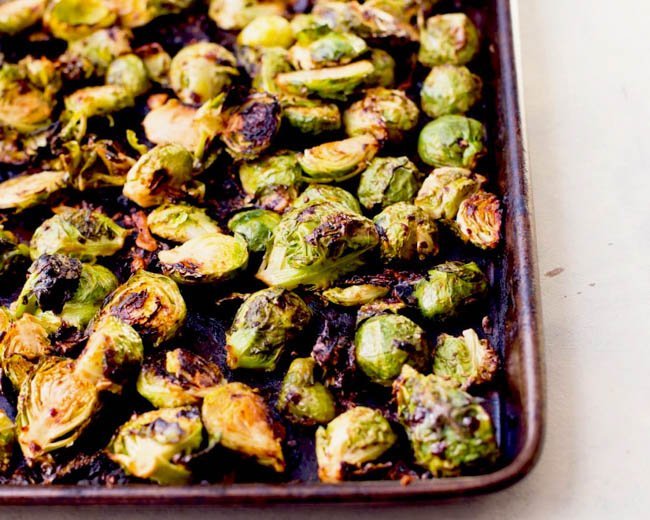
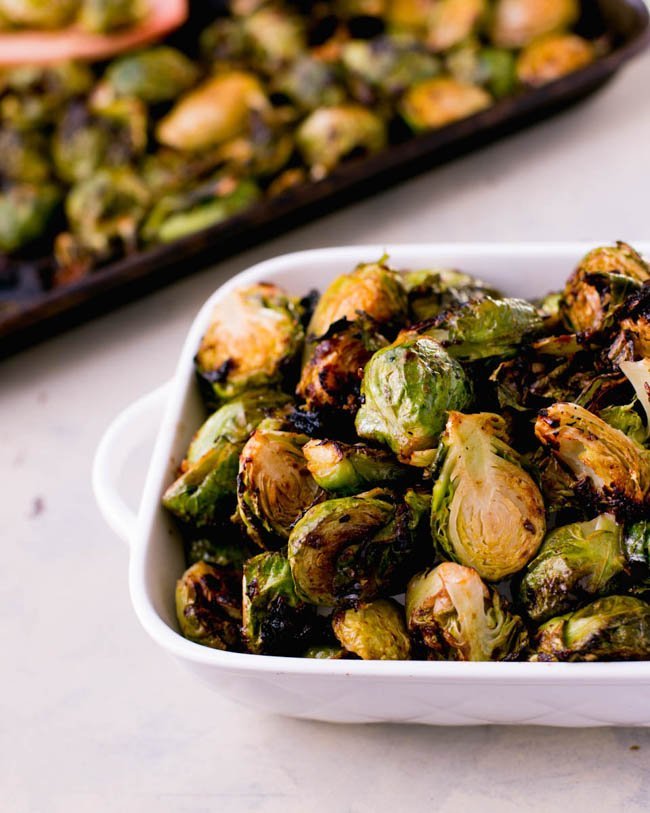
    In an unlikely twist, we chose to pair the Sunsweet prunes with the cruciferous bad boy known as brussel sprouts. These may not be two foods that are traditionally paired together, but trust us when we say this is a match made in Food Heaven.

    Brussels sprouts are one of those vegetables that don’t get the love they deserve. To us, they’re like miniature heads of cabbage that, when cooked right, are slightly crisp but perfectly tender.

    As cruciferous vegetables – housed in the same family as kale, broccoli, and cauliflower –brussels sprouts pack a meaningful dose of fiber with every bite. One cup of brussels sprouts alone meets about 16% of your fiber needs for the day, which studies suggest may help to keep you regular and lower cholesterol. In addition to the fiber benefit, one serving of brussels sprouts contains all of your daily vitamin K and vitamin C needs. They are also a chock full of other important vitamins and minerals such as folate, manganese, vitamin B6,  choline and copper.  

    Ready to give it a try? Let’s get into the recipe (it’s easy, we promise!) First things first, you’ll want to start by preheating the oven to 400F. Next, slice your brussels sprouts in half and then add them to a parchment paper-lined baking dish. Set to the side.

    Now we’ll work on creating the glaze. In a food processor, add 8 garlic cloves, 6 Sunsweet prunes, 2 tablespoons of tamari/soy, and ¼ cup of olive oil. Pulse until all ingredients are processed, and you have a consistent paste.

    Remove the prune paste from the food processor and massage it into the brussels sprouts with your hands, until all of the sprouts are evenly coated.

    Lastly, pop the dish into the oven for 25 minutes. Once done, remove from the oven, let cool, and add salt to taste. This recipe pairs perfectly with your favorite grains and proteins – remix it throughout the week. It will stay fresh for up to 3-4 days in the fridge.

    Did you give this recipe a try? Let us know how it turned out in the comments below! Also, what are your favorite ways to incorporate prunes into your diet? Do share!

    Print
    Prune Glazed Brussel Sprouts
    Servings: 4
    Ingredients
    • 8 cups brussel sprouts halved
    • 8 garlic cloves
    • 6 Sunsweet prunes
    • 2 tablespoons of low-sodium tamari/soy sauce
    • 1/4 cup olive oil
    • Salt to taste
    Instructions
    1. Preheat the oven to 400F
    2. Add the brussel sprouts to a parchment paper-lined baking dish
    3. In a food processor, add the garlic, prunes, tamari/soy, and olive oil
    4. Pulse until you have a consistent paste
    5. Massage the paste into the brussel sprouts with your hands, until all of them are evenly coated

    6. Pop into the oven for 25 minutes. Let cool, and add salt to taste. Enjoy!

    Filed Under: Appetizers, Salads, Sides

    Black Girl Baking w/ Jerrelle Guy

    February 28, 2018 by Wendy 2 Comments

     
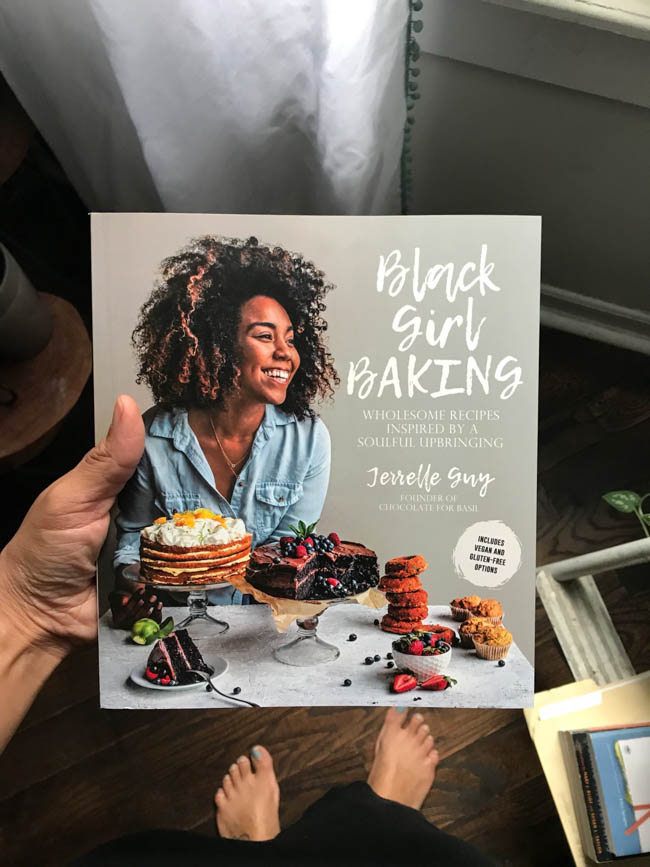
    Today we’re chatting with Jerrelle Guy, founder of the popular food blog Chocolate for Basil and author of the cookbook Black Girl Baking. Jerrelle is a food scholar, award-winning food photographer, recipe contributor and Tastemade Tastemaker. She has been featured in Vogue, The Boston Globe, Design Sponge and more. Jerrelle currently resides in Boston, Massachusetts.


    In this episode, we will cover: 

    • Jerrelle’s process for creating stunning and moving food photos 
    • Her experience as a black woman in the food and photography world
    • How she developed her unique recipe and photography style 
    • How she finds balance in social media 
    • Where she goes to for recipe inspiration
    • Her experiences in creating recipes that honor health through food, while also honoring enjoyment
    • & MORE! 
    This podcast is sponsored by Camille Rose Naturals:

    Camille Rose Naturals is the go-to brand for those of you looking for safe and effective products for hair, body, skin, and home. Products can be found nationwide in Target, Wal-Mart, Whole Foods, and Bed, Bath & Beyond. To learn more about their products, click here! 

    How to submit a question: It’s easy! Simply record your question on the voice memo of your phone and email it to us at in**@****************sy.com. We’ll try our best to answer your question on an upcoming episode (and we’ll be sure to email you when we feature your question).
    Can you do us a huge favor? If you enjoyed this episode, please do us a huge favor and leave us a review on iTunes ….right now. The more reviews we get, the higher we are ranked in iTunes, which means we reach more people!
    How to subscribe: 

    • iTunes (apple)
    • Google Play (android)
    • SoundCloud (both)

    Connect with us online:

    • Instagram @foodheaven
    • Twitter @foodheavenshow
    • Facebook @foodheavenmadeeasy
    • Pinterest @foodheavenmadeeasy

    Our podcast is released every Wednesday. In each episode, we cover tips and tricks for making lifelong sustainable healthy living changes to upgrade your diet and health. We also interview leading experts in the field of health and nutrition to pick their brains on how to cultivate a healthy life that you love. We hope you enjoyed this episode, and we’ll catch you next time!

    Filed Under: Podcast

    Collard Green Potato Soup

    February 27, 2018 by Wendy 21 Comments

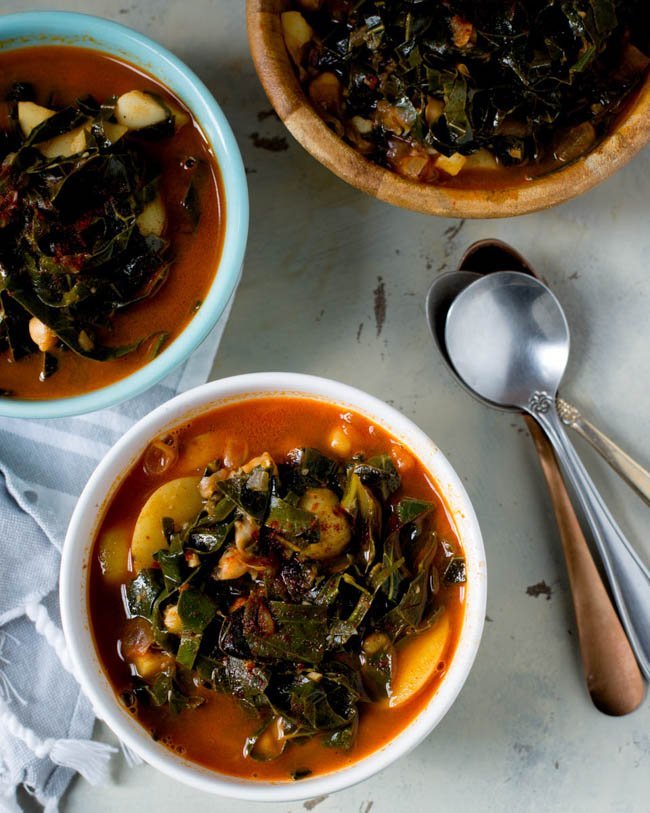
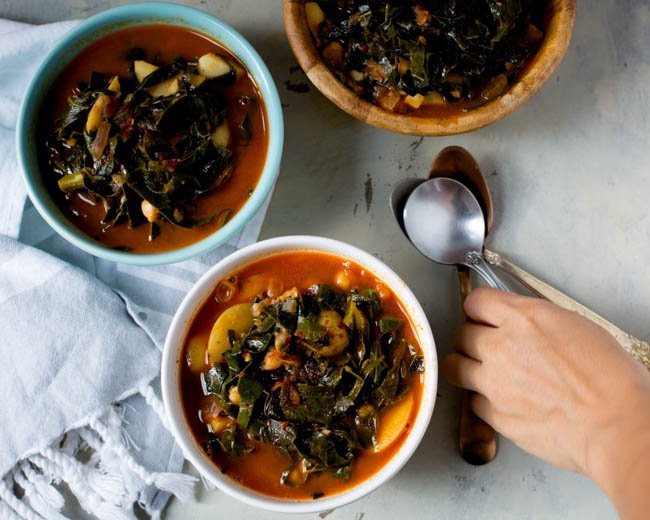
    With Black History Month coming to an end, we’re wrapping things up with this Potato Collard Green Soup. It’s filling, hearty, and has all the soul you need in life. 

    Collard greens are a staple in Black cooking that goes back centuries. During slavery, ingredients for meals were slim. Meals often consisted of scraps of meat and vegetables. Collards were one of those vegetables that were readily available to slaves. Collards are a wide, leafy green in the same family as kale, Brussels sprouts, broccoli and cabbage. They are an excellent source of vitamin K, A, and C and also contain nutrients like folate and fiber. 

    Today we’re doing a twist on this Potato, Collard Green, and Chorizo Soup adapted from one of our favorite blogs, Chocolate For Basil. We swapped some hearty chickpeas for chorizo to give you a healthy dose of plant-based protein and an extra dash of fiber. If you have trouble finding sumac (like we did), sub in some paprika + lemon zest for a similar flavor.

    Jerrelle is the mastermind behind Chocolate For Basil, and we love her so much that we are interviewing her on the podcast (going live tomorrow!) so be sure to keep your eyes peeled! And while you’re waiting on that podcast episode, go buy Jerrelle’s incredible cookbook, Black Girl Baking, ASAP.

    Enough chit chat…let’s get this soup going! In a large pot, heat the olive oil over medium heat, and add the onions and sauté for 2 minutes before adding the garlic. Cook for another minute, stirring constantly being careful not to burn, and then add in the chili powder and red pepper flakes. Stir and cook for 30 seconds or until fragrant, then add in the veggie broth and milk, stirring to combine. Salt to taste.

    Next, add in the cubed potatoes, and bring to a boil. Then reduce the heat to medium low, place a lid over the top, and cook for 20-25 minutes or until the potatoes are fork tender. Then add in the collards, chickpeas, lemon juice, and tamari, stir to combine, and cook with the lid on again for another 10 or so minutes or until the collards are tender. When ready to serve, sprinkle over the paprika, dash of lemon zest, adjust for salt, and stir in the butter to finish/to cut the acidity. Serve into bowls and enjoy!

    Hands up if collards are a staple on your menus! We can’t get enough of this Potato Collard Green Soup. What are your favorite collard recipes? Let us know what you think of our plant-based spin in the comments below!

    4.75 from 4 votes
    Print
    Potato Collard Green Soup
    Servings: 4
    Ingredients
    • 2 tablespoon olive oil
    • 1 small red onion, chopped
    • 5-6 cloves garlic, finely chopped
    • 1/2 teaspoon chili powder
    • 1/2 teaspoon red pepper flakes
    • 1, 32- ounce container veggie broth
    • 1 cup milk (vegan unsweetened milk ok)
    • 2 large yellow potatoes, cut into bite-sized pieces, about 3 cups
    • 2-3 cups of cleaned and chopped collard greens, thick stems removed
    • 1 cup cooked chickpeas
    • Juice of 1 lemon
    • 1 tablespoon tamari or soy sauce
    • 1 tablespoon paprika
    • Lemon zest
    • 2-3 tablespoon vegan butter
    • Salt to taste
    Instructions
    1. In a large pot, heat the olive oil over medium heat, and add the onions and sauté for 2 minutes before adding the garlic.

    2. Cook for another minute, stirring constantly being careful not to burn, and then add in the chili powder and red pepper flakes.
    3. Stir and cook for 30 seconds or until fragrant, then add in the veggie broth and milk stirring to combine. Salt to taste.
    4. Add in the cubed potatoes, and bring to a boil. Then reduce the heat to medium low, place a lid over the top, and cook for 20-25 minutes or until the potatoes are fork tender.
    5. Add in the collards, chickpeas, lemon juice, and tamari, stir to combine, and cook with the lid on again for another 10 or so minutes or until the collards are tender.
    6. When ready to serve, sprinkle over the paprika, dash of lemon zest, adjust for salt, and stir in the butter to finish/to cut the acidity. Serve into bowls and enjoy!

    Filed Under: Main Courses

    Plant-Based Monday: Purple Sweet Potato

    February 26, 2018 by Wendy Leave a Comment

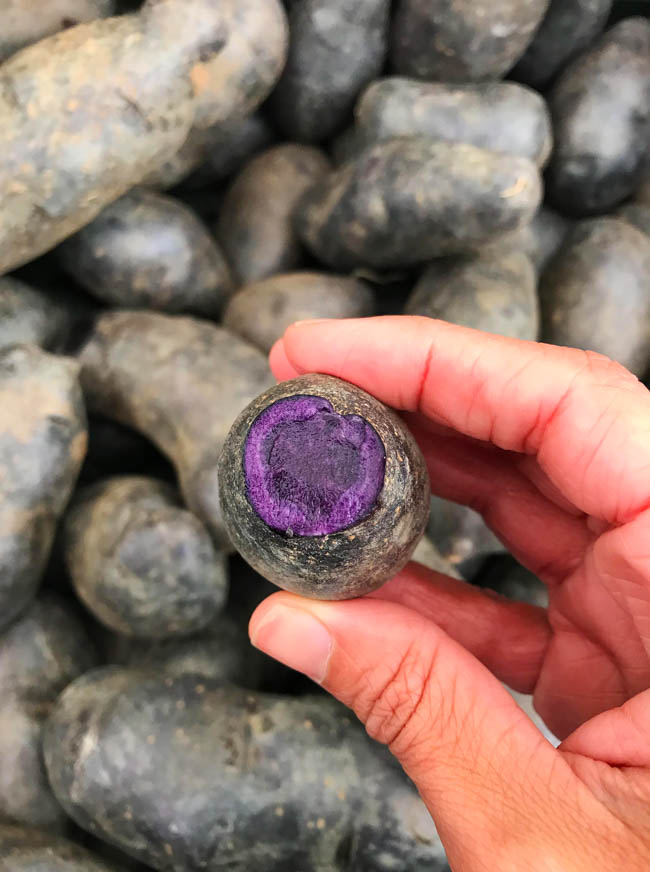
    We love us some taters. Especially when they have a gorgeous colors like these Purple Sweet Potatoes do. Today we’re talking about why these vibrant babes deserve a seat at today’s plant-based Monday table. 

    Purple sweet potatoes are a bit self explanatory. They are a sweet potato with a standard dull exterior but bold purple flesh that has a rich, sweet flavor. They tend to be a bit denser than a regular sweet potato, which may require a longer cooking time to soften up. There are a few different varieties of purple sweet potatoes: the Stokes purple sweet potato, Okinawan purple sweet potato, and the Ube.

    The Stokes sweet potato originated in the Americas and is sold commercially here. It has a purple tinted skin and a deep purple flesh. The Okinawan sweet potatoes originated in the North and Central Americas, but were brought back over to Asia where they became a staple in Japanese dishes. They are distinguished by their beige colored skin and dark purple interior. Finally, the Ube is actually a purple yam that is most commonly found in the Philipines. An Ube can be identified by its brown, bark-like skin with a similar purple flesh.
    We recently listened to a talk about the Japanese culinary concept called, Washuko. One of the pillars in Washuko is the concept of the five colors. This pillar focuses on featuring all different colors in a dish in order to create a more nutritionally balanced and beautiful plate. The different colors of foods typically represents different nutrients, especially when looking at fruits and vegetables.

    In this case, purple sweet potatoes have a nutrient called anthocyanins that give them that vibrant color. Anthocyanins have been linked to lowering risk of cancers, lowered risk for cardiovascular disease, and has also been shown to improve cognitive function. Purple sweet potatoes are also high in potassium, vitamin C, and fiber.

    Purple sweet potatoes can be used in similar ways that you would prep any old potato. They are great baked, roasted, mashed, in soups, or as fries. Store them in a cool dark area and they will last for weeks. Try them out in recipes like:

    • Thai Stuffed Sweet Potatoes with Red Curry Sauce
    • Crispy Oven Roasted Purple Sweet Potato Fries
    • Mashed Purple Sweet Potatoes
    • Or sub them in for any of our potato recipes like these Hasselback Garlic Sweet Potatoes

    Have you had purple sweet potatoes before? They are so vibrant, making them super fun to prep for kids or anyone looking to electrify their meals with splashes of color. Let us know your favorite purple sweet potato recipes in the comments below!

    Filed Under: Articles

    Plant-Based Monday: Jerusalem Artichoke

    February 19, 2018 by Wendy 5 Comments

    We’ve got that new new for you this week with this plant-based Monday feature. Say hey to the wonderful Jerusalem Artichoke. Have you used them? Heard of them? First things first, they’re not actually artichokes and they do not come from Jerusalem. So what’s the deal with this mysterious little tuber?

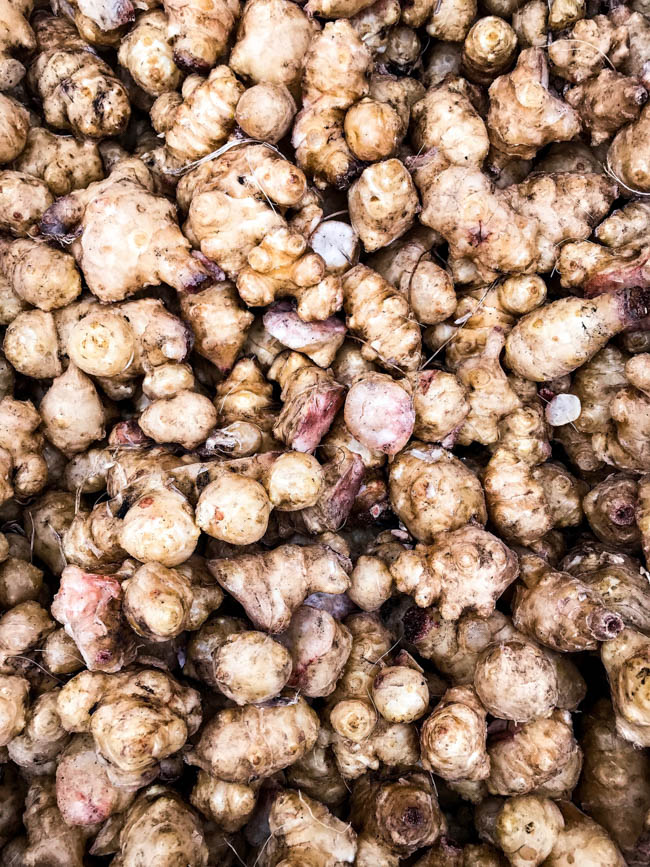
    Jerusalem artichokes are a tuber that actually look more like ginger root than anything else. They come from the edible root of a flowering plant that look like little sunflowers. They belong to the sunflower family and are often referred to as sunchokes. Jerusalem artichokes originated in North America and have gained a lot of popularity in European countries.

    Nutritionally, Jerusalem artichokes don’t disappoint. They are a great source of iron and also a good source of thiamin and potassium. Another key factor about Jerusalem artichokes is that they are low on the glycemic index. They won’t cause significant blood sugar spikes, which may be useful for people with diabetes. The fiber content of these veggies will also help to slow the rise of blood sugars and promote a healthy GI tract. 

    Speaking of GI health, Jerusalem artichokes are a good source of prebiotics. They contain a fiber called inulin. The bacteria in the gut converts inulin into short chain fatty acids, which results in a number of health benefits! 

    These tubers have a sweet and nutty flavor similar to jicama. They taste great raw or roasted. They are in peak season October through March, so be sure to check for them at your local market before they’re gone. To buy, choose smooth, unblemished Jerusalem artichokes that don’t have many bumps. To store them, keep in a cool, dark, and well-ventilated area similar to where you store potatoes. Most Jerusalem artichokes will last anywhere from 1-3 weeks if properly stored.

    We love to keep it simple by chopping and roasting them, with some salt and pepper, but here are some other wonderful recipes to try:

    • Baked Jerusalem Artichoke Chips
    • Crispy Jerusalem Artichokes with Aged Balsamic
    • Roasted Jerusalem Artichokes with Feta & Garlic Dill Butter

    How many of you have tried Jerusalem Artichokes/Sunchokes in the past? Try them out before they’re gone & let us know what you think in the comments below!

    Filed Under: Articles

    • « Go to Previous Page
    • Page 1
    • Interim pages omitted …
    • Page 60
    • Page 61
    • Page 62
    • Page 63
    • Page 64
    • Interim pages omitted …
    • Page 96
    • Go to Next Page »

    Primary Sidebar

    Search

    Let’s Connect

    Meet Wendy & Jess

    Registered Dietitians & BFF's. We're probably busy eating right now.

    Subscribe to our Podcast

    food heaven podcast

    Podcast Hookup Codes

    food heaven podcast hookup codes

    Meet Wendy & Jess

    Registered Dietitians & BFF's. We're probably busy eating right now.

    • Diabetes Digital
    • Our Story
    • Recipes
    • Resources
    • Articles
    • Contact
    • Policies
    © Food Heaven Made Easy
    In order to provide you with the best service, our website uses cookies. By continuing to browse the site you are agreeing to our Privacy Policy I consent
    Privacy Policy

    Privacy Overview

    This website uses cookies to improve your experience while you navigate through the website. Out of these cookies, the cookies that are categorized as necessary are stored on your browser as they are essential for the working of basic functionalities of the website. We also use third-party cookies that help us analyze and understand how you use this website. These cookies will be stored in your browser only with your consent. You also have the option to opt-out of these cookies. But opting out of some of these cookies may have an effect on your browsing experience.
    Necessary
    Always Enabled
    Necessary cookies are absolutely essential for the website to function properly. This category only includes cookies that ensures basic functionalities and security features of the website. These cookies do not store any personal information.
    Non-necessary
    Any cookies that may not be particularly necessary for the website to function and is used specifically to collect user personal data via analytics, ads, other embedded contents are termed as non-necessary cookies. It is mandatory to procure user consent prior to running these cookies on your website.
    SAVE & ACCEPT