• Skip to main content
  • Skip to primary sidebar
Listen to the Latest Podcast EpisodeAnd We’re Back! Introducing: Diabetes Digital
Food Heaven Made Easy

Food Heaven Made Easy

Black Registered Dietitian Nutritionists | Intuitive Eating Dietitians

  • About
  • Press
    • Diabetes Digital
    • Start Here
    • Podcast
      • Hookup Codes
    • Work With Us
    • Resources
      • Recipes
      • Blog
      • Cookbook
      • Books We Love
    Looking for nutrition counseling with expert registered dietitians?
    Get Started

    Jessica

    Coconut Oil

    March 9, 2016 by Jessica Leave a Comment

    Filed Under: Our Kitchen Favs

    Roasted Beet Hummus

    February 21, 2016 by Jessica 5 Comments

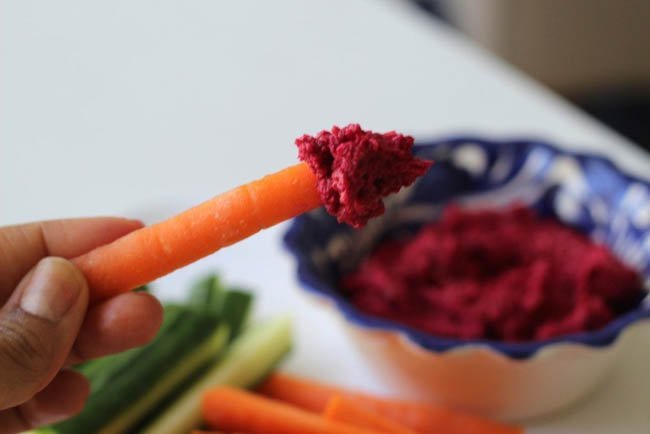
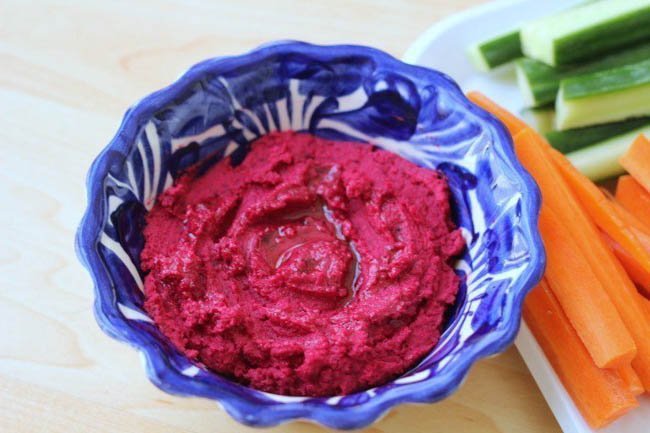
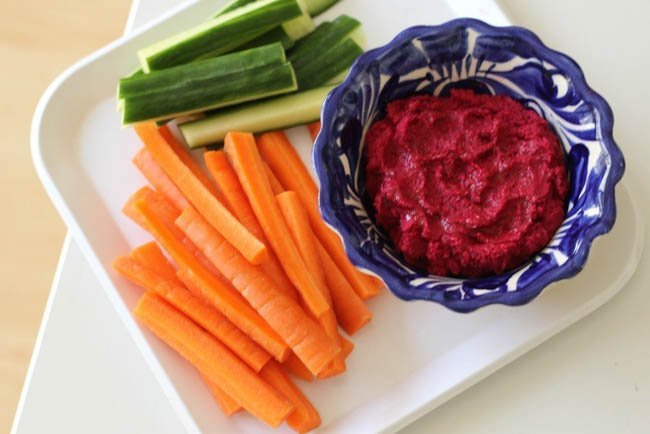
    This roasted beet hummus recipe takes one of the best food creations on earth, and elevates it to another level. It’s thick, rich, creamy, filling and absolutely delicious. There is even a lingering layer of sweetness with each bite. I had the hummus with carrots and cucumbers (pictured above) for lunch and I’m still full two hours later.

    One of the best things about this mediterranean delight is that it’s high in fiber and protein. Chickpeas in particular contain 12 grams of protein and 15 grams of fiber per cup. All that protein and fiber found in legumes has actually been linked with keeping you fuller for longer and preventing binging or energy crashes related to sudden spikes in blood sugar levels. Chickpeas are also a great source of copper, iron, phosphorous and zinc.

    Beets are just as healthy as chickpeas. They are a great source of a phytonutrient called betalains, which provide antioxidant and anti-inflammatory support to the body. For this recipe, we removed the skin off the beets, then cooked them in the microwave for a few minutes. We then chopped and roasted the beets at 400F for 20 minutes. You can also steam the beets for 15 minutes to maximize their nutrition and flavor. Fill the bottom of the steamer with 2 inches of water and bring to a rapid boil. Add beets, cover, and steam. Okay- here goes the recipe! 
    Print
    Roasted Beet Hummus
    Ingredients
    • 1 can of chickpeas
    • 1/2 cup of roasted beets
    • 2 tablespoons of tahini sauce
    • 1 1/2 tablespoons of olive oil
    • Juice of 1/2 squeezed lemon
    • 1 clove of garlic
    Instructions
    1. Pulse hummus, beets, tahini, olive oil, garlic and lemon in food processor
    2. Serve with sliced carrots and cucumbers
    3. Makes about 4 servings
    4. Enjoy!

    PS. 2016 is the International Year of the Pulses (dry beans, chickpeas, lentils, and peas), and we’ve teamed up with North American Pulses to bring you some mouthwatering Food Heaven pulse recipes. If you haven’t already, click here to take the Pulse Pledge. If you missed our spicy lentil burger recipe, check it out here. 

    This post was created in collaboration with USAPulses & PulseCanada.   

    Filed Under: Recipes, Spreads, Condiments, Sauces

    Is Soy Safe to Eat?

    February 10, 2016 by Jessica 4 Comments


    Vegetarianism is on the rise, and more of us are eating soy. But is soy actually safe to eat? Let’s explore…

    So many of you have sent us soy-related questions, so today we’re going to share some good old evidenced-based information so that you can decide if soy is right for you.

    So what exactly is soy?

    • Soy comes from soybeans and it’s used to make tons of food products in the market like oils, tofu, soymilk, soy sauce, tempeh, and more.
    • The reason it’s so popular among vegetarians is because it’s considered one of the most complete plant-based sources of protein.
    • Tofu, which is big in the vegan world, soaks up whatever flavors and spices you cook it in, and can resemble the consistency of some animal-based products (like cheeses, meats, and poultry).
    • This can be especially helpful for someone who is making the transition into veganhood, but finds it hard to leave behind animal-based food products.

    Here are three soy rumors we’ve come across:

    1. Soy has estrogen, which causes breast cancer.
    2. Soy causes early puberty.
    3. Soy makes men grow breasts.

    Where does the controversy come from?

    • Well, soy naturally contains phytoestrogens, which have the ability to act like estrogen in the body. Phytoestrogens are plant-derived compounds found in a variety of foods.
    • Soy has a significantly higher content of phytoestrogens when compared to other foods. High levels of estrogen in the body have been linked with breast, endometrial, and uterine cancer. However, it’s important to note that soy influences estrogen activity in the body- not estrogen levels.
    • A lot of the soy controversy has come from research done on rats, where rats injected with more phytoestrogens could be at an increased risk for breast tumors. There have also been numerous studies with rats that indicate just the opposite effect.  
    • Also, a lot of these animal studies involve very concentrated high-dose forms of phytoestrogens- which usually doesn’t resemble how humans typically consume soy.

    What does human research tell us?

    • Research done on humans has shown that soy has an insignificant effect on breast cancer, and some studies have even shown that soy can actually protect against certain types of cancer and heart disease.  
    • Soy is relatively new to us in the states, but there are various countries in Asia that have been eating soy within the context of a traditional diet since forever, and there has not been evidence of harm.
    • See the links below for more information to studies, research, and articles, for those of you who want to nerd up and look into the evidence.

    And the bottom line?

    • Although some animal studies have shown inconclusive results when it comes to cancer and soy, studies in humans have not shown any significant harm from eating soy foods.
    • Also, although soy has been shown to offer health benefits, this doesn’t mean that you need to eat pounds of soy for breakfast, lunch, and dinner or start popping phytoestrogen supplements.

    How much soy can I safely eat?

    • Stick to a maximum of 2-3 servings per day. Also aim for high quality soy products.
    • By this I mean organic and minimally processed things like tofu, edamame, and organic soy milk are all good options.
    • Try to stay away from soy cheeses, soy burgers, soy energy bars, imitation meats, and other soy products that are packed with crappy additives.

    Useful Links:

    http://www.ncbi.nlm.nih.gov/pmc/articles/PMC3074428/

    http://www.ncbi.nlm.nih.gov/pubmed/24586662

    http://vegetariannutrition.net/docs/Soy-Safety.pdf

    Filed Under: Podcast

    What Supplements We Take and Why

    August 27, 2015 by Jessica 2 Comments

    WENDY

    1. Vitamin D: 
    Living in NYC, it can be challenging to get enough sunlight (which results in Vitamin D synthesis). I take 1000 IU of this Vitamin D3 capsule daily.

    2. Probiotics: 
    I just started using this line of Probiotic Acidophilus supplements, to promote an overall healthy GI tract. I take one cap daily.

    I’ve been using this site to choose my supplements. They conduct independent testing of supplements based on label accuracy, product purity, nutritional value, ingredient safety, and projected efficacy. I love this site because they also provide a ranking for each product based on quality AND value- which helps you choose a good product that is also within your budget.
    [line]

    JESS

    1. Probiotics
    Like Wendy, I also take probiotics daily. Different probiotics are good for different functions within the body. I like to take a probiotic that’s good for women’s health, so I focus more on the strands lactobacillus and bifidobacterium. If you are looking more for GI support, acidophilus (which is the probiotic Wendy takes) is great for you. Here is a brand I like.

    2. Fish Oils
    Fish oils are tricky because you want to focus more on EPA/DHA vs Omega 3s. EPA/DHA is the active form of Omega 3, so you are better off going straight to the source. These are often more expensive, especially if you take more than 1 gram of EPA/DHA (which I do), so I try to save moolah by copping them at Target or Costco.  I usually recommend fish oil to my patients with high triglycerides and cholesterol who do not eat fish at least 3 times per week. I take this for general heart health and dryness. My optometrist also noted that my eyes were very dry from contact lenses and recommended fish oil to help. It is also a good mood booster.

    3. Magnesium
    A year and a half ago, I was diagnosed with a condition called chronic daily headaches, which is where you basically have headaches for most days out of the month that aren’t really associated with any cause. Since then, I have been taking 400mg of magnesium every day, as studies suggest it’s helpful for people who suffer with chronic headaches and migraines. You have to stay consistent with it, and make sure to take for at least 3 months to see results. Some people find that magnesium is also helpful in alleviating constipation.

    4. CoQ10
    CoQ10 is great for people who take cholesterol lowering medications also known as statins. There is also research that shows it’s beneficial for people who suffer from chronic daily headaches. I take 100-200 grams of this daily.

    5. Riboflavin (or Vitamin B2)
    Another goodie for people who have chronic daily headaches or migraines.  Studies suggest that taking high-dose riboflavin (400 mg/day) seems to significantly reduce the number of migraine headache attacks.

    As always, be sure to check with your doctor before starting any new supplement, especially if you have any underlying health conditions or take medications.


    Filed Under: Articles Tagged With: nutrition, supplements

    Warm Lemon Water Detox – Does it work?

    August 26, 2015 by Jessica Leave a Comment

    Lemon Water Detox – There are countless claims that having warm lemon water in the AM will do wonders for detoxifying your body, specifically the liver. The short answer to that is: it’s not likely. There is an antioxidant in the fruit called d-limonene, which is also found in oranges and grapefruit (the highest concentrations found in the peel). This antioxidant has been shown to activate compounds in the liver that are part of the detoxification process. However, lemon juice only contains about 1/5 of the levels that are needed to detoxify.  When you nourish your body with all the healthy foods that it needs, it does a great job at detoxifying itself with out the assistance of any special water or detox. Having said that, there are several benefits to having a warm cup of lemon water in the AM.

    Hydration: Having a glass of lemon water, or any water for that matter, first thing in the morning helps us jump start our day with the hydration the body needs to thrive. I tell my patients to have1-2 cups of water when they first wake up, lemon or not, to re-hydrate after a long night’s sleep.

    Vitamin C: All citrus foods (lemon, lime, grapefruit, orange) are great sources of vitamin C. Having just 2 ounces of pure lemon juice in the AM will provide you will 1/2 of your vitamin C needs for the day.

    Eat Less: Some studies suggest that drinking water (lemon or not) before meals leads to feeling full, which in turn will prevent overeating. (This one definitely works for me as well!)

    Reduce constipation: Some research suggests that having a warm glass of water in the AM can actually stimulate the bowels to get moving, which can lead to decreased instances of constipation.

    Iron: Drinking lemon water in conjunction with foods that contain iron will help promote iron absorption. If you know your iron is low and the doctor has prescribed you iron supplements, having a class of lemon water with your supplement will help your body absorb more vit C. Note: We do not recommend iron supplementation if your doctor has not diagnosed you with a deficiency.

    Filed Under: Articles

    How To Get Kids to Eat More Veggies

    August 26, 2015 by Jessica 2 Comments

    I work both in an adult medicine and pediatric clinic and one of the common issues our parents face is that their kid doesn’t like to eat veggies. I reassure them that this is normal, but also point out that it is hard to be healthy with a diet void of vegetabless.

    In fact, the USDA recommends that we all eat vegetables, everyday. At different age ranges that intake varies, but here’s a general daily guideline for kids:

    2-3 year olds: 1 cup of veggies
    4-8 year olds: 1.5 cups of veggies
    9-13 year olds: 2 to 2.5 cups of veggies
    14-18 year olds: 2.5 to 3 cups of veggies

    If you find your child isn’t eating that amount of veggies per day, here are some tips that have worked for the families I work with.

    1. Focus on what they like. Does your child really not like any vegetables. At all? Parents often say yes, but when I turn around and ask the kid: do you like broccoli, do you like carrots, do you like cauliflower, etc., the answer is usually yes to at LEAST a couple of vegetables. This is a great place to start. Reward your child for eating vegetables they like and encourage them to venture out and try a few more veggies. It often helps if you explain that veggies will help them grow and be strong just like mom and dad.

    2. Let them have a choice. Many kids want to feel like they have a sense of power over what they eat. When it comes to veggies, offer two choices at mealtimes. For example, let them choose between carrots and broccoli or asparagus and cauliflower. Being a part of the decision making process may be all your kid needs to try something new.

    3. Make it fun. I love love love this Vegetable Discovery Table from Cook Smarts. I even created a Spanish version since 95% of the pediatric patients that I work with are Spanish speaking. The idea is that each time your child tries even a bite of a new vegetable, they can add a sticker to the chart. Red = they didn’t like it. Yellow = so so. And green means it’s a go.

    4. If at first you don’t succeed, try try again. And again. And again and even again x 10. Most kids need to be exposed to a new food 10-15 times before they start to tolerate, or even like it.
    Don’t give up if your kid doesn’t like vegetables on the first tasting, as it will usually take several before they are open to more.

    5. Be a good example. A lot of times parents will complain that their child does not like x,y or z, but when we get down to the nitty gritty, the parent is not actually eating a vegetable rich diet either. Remember that often times your kids will follow your lead, so if you are eating a healthy, mostly plant-based diet, they are more likely to also.

    6. Sneak ’em in. Okay, so sometimes nothing you do works. In these instances, I opt for the sneak in. A great places to start is a smoothie. I co-teach a pediatric healthy eating group with one of the pediatricians at my clinic and we make different healthy recipes each week. A couple of months ago I made my green smoothie recipe that consisted of almond milk, non-fat plain Greek yogurt, pineapples and spinach. The kids had no idea that there was spinach in the smoothie and you know what? They gulped it down with a quickness. Other ways to sneak in veggies are shredding carrots and adding them to pasta and pizza (like the example above). Or pureeing onions, peppers, garlic, carrots, broccoli and adding to your favorite soup or pasta sauce. It works!

    7. Save it for later. Okay, so maybe Jimmy is not in the mood for his vegetables now. That’s okay. Put them in the fridge and save them for when he is hungry again. When his stomach starts growling, pull them out and offer them again. Make sure that he has at least a few bites before letting him have any treats or dessert.

    I hope this was helpful. If you try a few things from this list, let us know if they worked!

    Filed Under: Articles

    • « Go to Previous Page
    • Page 1
    • Interim pages omitted …
    • Page 18
    • Page 19
    • Page 20
    • Page 21
    • Page 22
    • Interim pages omitted …
    • Page 36
    • Go to Next Page »

    Primary Sidebar

    Search

    Let’s Connect

    Meet Wendy & Jess

    Registered Dietitians & BFF's. We're probably busy eating right now.

    Subscribe to our Podcast

    food heaven podcast

    Podcast Hookup Codes

    food heaven podcast hookup codes

    Meet Wendy & Jess

    Registered Dietitians & BFF's. We're probably busy eating right now.

    • Diabetes Digital
    • Our Story
    • Recipes
    • Resources
    • Articles
    • Contact
    • Policies
    © Food Heaven Made Easy
    In order to provide you with the best service, our website uses cookies. By continuing to browse the site you are agreeing to our Privacy Policy I consent
    Privacy Policy

    Privacy Overview

    This website uses cookies to improve your experience while you navigate through the website. Out of these cookies, the cookies that are categorized as necessary are stored on your browser as they are essential for the working of basic functionalities of the website. We also use third-party cookies that help us analyze and understand how you use this website. These cookies will be stored in your browser only with your consent. You also have the option to opt-out of these cookies. But opting out of some of these cookies may have an effect on your browsing experience.
    Necessary
    Always Enabled
    Necessary cookies are absolutely essential for the website to function properly. This category only includes cookies that ensures basic functionalities and security features of the website. These cookies do not store any personal information.
    Non-necessary
    Any cookies that may not be particularly necessary for the website to function and is used specifically to collect user personal data via analytics, ads, other embedded contents are termed as non-necessary cookies. It is mandatory to procure user consent prior to running these cookies on your website.
    SAVE & ACCEPT